


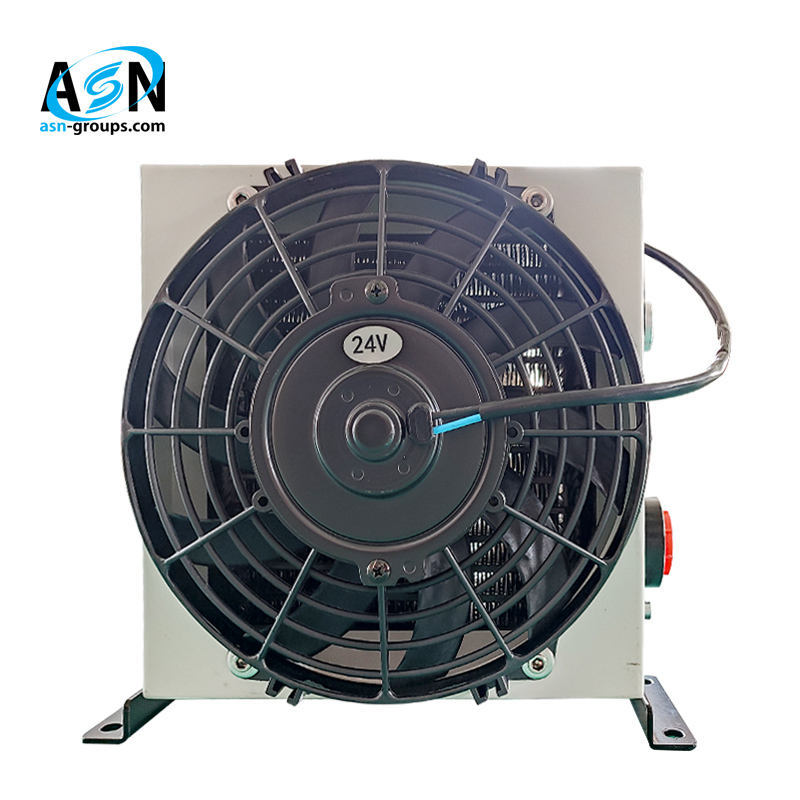
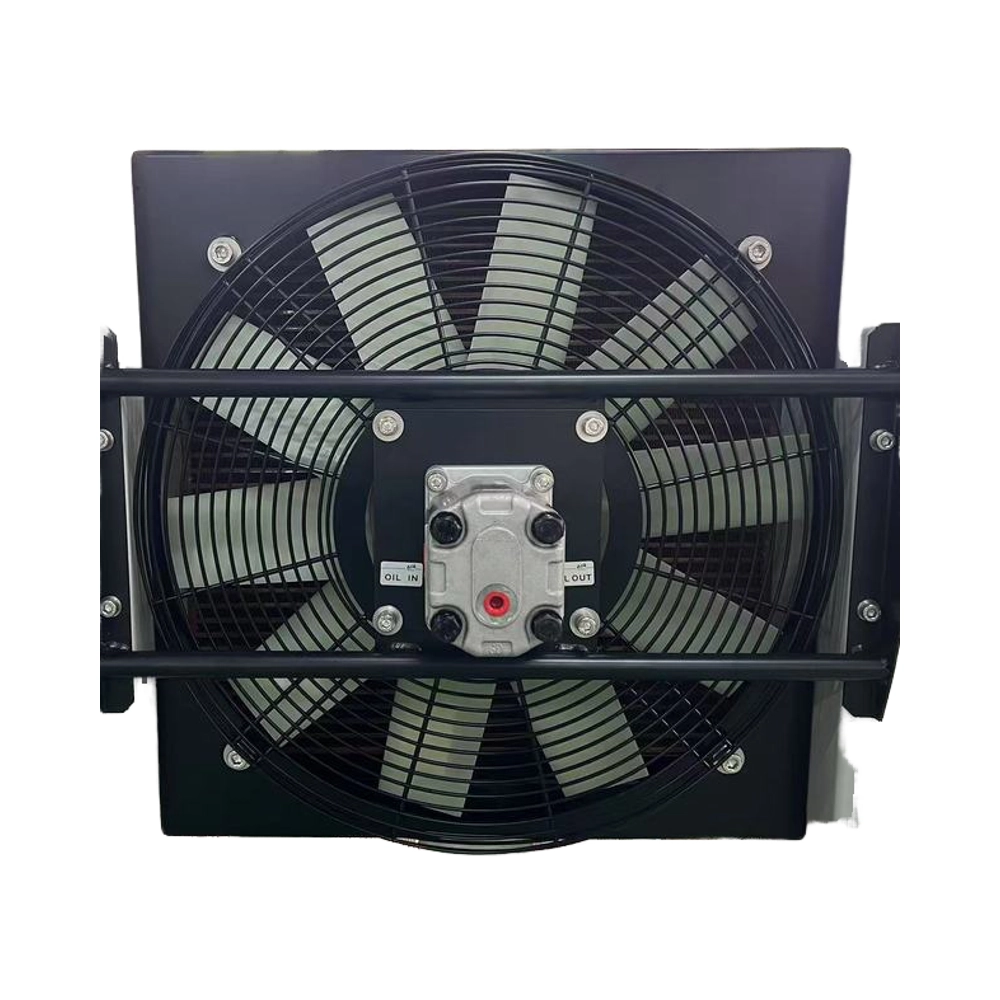
The مشعاع تبريد الزيت الهيدروليكي المصنوع من الألومنيوم is a key component in industrial and mobile machinery for the stability of operating temperatures and the safety of important parts. Hydraulics generate a great deal of heat while working, particularly in high-pressure applications where energy is being transmitted by compressed fluid. If heat is not managed properly, then a temperature rise will reduce the viscosity of the oil, increase wear will take place, seals start degrading, and finally lead to failure of the system.
The Aluminum Hydraulic Oil Cooling Radiator is a particular type of heat exchanger, constructed to radiate this surplus thermal energy. It carries the combination of aluminum alloy materials and fin structures with optimized fluid channels, maximizing the transfer of heat from hydraulic oil to ambient air or coolant at any rate, maintaining system stability and efficiency.
Aluminum radiators are the preferred choice of the industry because of their high thermal conductivity, lightweight, and corrosion resistance. With the increase in industrial automation and a requirement for more reliable heavy equipment, aluminum oil coolers play an increasingly key role in making this equipment long-lasting with steady output.
The trending size-and-power-and-longevity race to reduce and optimize coolers inside hydraulic machines, from excavators to injection molding machines, has placed the Aluminum Hydraulic Oil Cooling Radiator at the core of contemporary engineering design.

Structure and Design Principles
Aluminum Material Advantages
Aluminum Hydraulic Oil Cooling Radiator starts from the material itself. Aluminum is always favored because of its excellent balance between strength, weight, and thermal performance. Per unit weight, when compared to copper or steel, aluminum has a higher efficiency of heat transfer, thus enabling manufacturers to design lightweight and small constructions with no compromise on cooling capacity.
Aluminum is naturally corrosion-resistant, and even more so if anodized or coated, therefore suited to harsh, moist or dusty environments that include exposure to hydraulic fluid. It is a soft metal that allows the engineer to form and shape fins into any pattern he desires-in surface area as well as airflow efficiency.
Core and Fin Configuration
The core structure largely determines the performance of an Aluminum Hydraulic Oil Cooling Radiator. Most typical cores are made up of parallel layers of aluminum tubes and fins, arranged in such a manner as to allow maximum heat dissipation. Corrugated fins increase the surface area for better heat exchange, while louvered fins enhance turbulence, hence making thermal transfer from oil to air more efficient.
Depending on the application, radiators can be designed either as cross-flow or counter-flow types. In air-cooled systems, fans are mostly directly mounted on the core to ensure constant airflow, even at a standstill or low speed.
Fluid Dynamics and Heat Transfer Mechanism
Heated hydraulic oil flows inside the radiator through internal passages or flat tubes. As air moves across the fins, thermal energy is transferred from the oil to the metal surfaces and then to the air. This convective heat exchange reduces the temperature of the oil, thus maintaining the efficiency of the system and preventing an overheated condition.
More advanced models contain internal fluid mixers to increase heat transfer coefficients. CFD, Computational Fluid Dynamics, is being used more in the design process so that flow distribution can be optimized and pressure drops minimized.

Manufacturing Process and Quality Control
Extrusion and Brazing Techniques
Processes of precise engineering are involved in the manufacture of Aluminum Hydraulic Oil Cooling Radiators to make them reliable even under the most demanding conditions. The main components, that is, tubes, fins, and headers, are manufactured by extrusion and stamping processes. High-strength aluminum alloy profiles suitable to withstand pressure and vibration are fabricated by extruding thin-walled sections.
Brazing, especially in controlled atmosphere brazing (CAB), is that critical step that bonds the fins and tubes without causing any compromise to aluminum’s structural integrity. It allows a clean, strong, leak-free joint, ensured for maintaining performance over time.
Surface Treatment and Anti-Corrosion Measures
Aluminum is anodized or receives some other surface treatment, even if not necessary for corrosion protection. Anodic, epoxy, or electrophoretic coatings increase their resistance to salt spray and chemicals, and thermal fatigue. Anti-corrosive coatings are of marine and outdoor application in extending service life even under difficult conditions.
Surface finishing increases radiation efficiency, thereby increasing heat emission. A high emissivity or black surface will provide higher emissivity, hence better cooling.
Testing and Performance Verification
Quality controls are done on Aluminum Hydraulic Oil Cooling Radiators before delivery. It passes a test on how much pressure it can take, if it is airtight, how long it will last under constant shaking, and its thermal performance. A fully automated inspection system checks for micro-leakages and also ensures dimensional accuracy.
A thermal efficiency test proves whether the radiator can keep the oil at a certain temperature while the machine is working or not. That means such equipment should always perform well when used in systems like hydraulic excavators, wind turbines, or industrial presses.
Application Fields and Performance Benefits
الإنشاءات والآلات الثقيلة
In construction machinery and equipment, for example, excavators and loaders, dozers and cranes, the hydraulic systems perform under high loads as well as long operating hours. It is the Aluminum Hydraulic Oil Cooling Radiator that stops it from overheating during heavy-duty cycles, hence ensuring smooth motion control and hydraulic responsiveness.
The radiator keeps internal friction low by maintaining the optimum viscosity of the oil. It also prolongs the life of pumps, valves, and seals. In turn, this lowers the cost of maintenance and hence downtime for contractors and equipment operators, while improving energy efficiency.
Agricultural and Forestry Equipment
Tractors, harvesters, and forestry machines mostly work in dusty and high-temperature conditions. Aluminum oil coolers prove dependable in such an environment because of their light and strong construction. It does not easily corrode or catch debris to choke up any part; hence, efficiency is maintained either on a farm or within a logging area.
Since agricultural equipment is normally operated continuously over extended periods, the constant cooling of aluminum radiators makes productivity and fuel consumption very effective.
Marine, Automotive, and Industrial Systems
Besides land-based applications, Aluminum Hydraulic Oil Cooling Radiators are extensively applied in marine hydraulic systems for steering, winching, and propulsion. The aluminum construction is resistant to saltwater corrosion. Compact models of these units suit them well for shipboard installations.
Automotive and industrial hydraulic power units incorporate these radiators into machine tools and factory automation systems as a means by which oil temperatures can be maintained within prescribed limits under conditions involving substantial workloads.
Selection and Maintenance Guidelines
Key Parameters for Specification
The basic parameters that an engineer normally considers while selecting an Aluminum Hydraulic Oil Cooling Radiator include its heat dissipation capacity, working pressure, flow rate, and temperature range. It is hence important to suitably design the radiator specific to the hydraulic system requirements so as to avoid undercooling or even excess energy consumption.
Other factors include ambient temperature, space of installation, and properties of the fluid. For air-cooled units, an important parameter is the fan performance and direction of airflow, while in water-cooled types, proper coolant management, together with a corrosion inhibitor is required.
Installation and Operational Best Practices
Install radiators in a well-ventilated location. Do not allow anything to block air from freely flowing around the radiator. Use flexible mounting brackets and vibration isolators so that minimum mechanical stress is imparted on it, and also for easy installation.
Check hoses, fittings, and all seals regularly to prevent leakage or loss of pressure. Fins should be kept clean at all times; accumulated dust and dirt debris significantly reduce airflow, thus reducing cooling capacity.
Maintenance and Troubleshooting
Cleanliness, checking of leaks, and making sure the fan or pump is working well are all parts of routine maintenance. In case there is an abnormal rise in oil temperature, possible reasons could be blocked fins, low air flow, or internal fouling.
Flushing the radiator will remove the contamination that is blocking it and restore efficiency back to normal. High-quality hydraulic oil and a proper filtration system also minimize thermal load on the radiator, hence the life span.
Sustainability and Technological Innovation
Lightweight Design and Energy Efficiency
As industries prioritize energy efficiency, Aluminum Hydraulic Oil Cooling Radiators lead the sustainable design with lightweight features that reduce the total mass of systems to enhance fuel economy and eventually lower carbon emissions from mobile equipment. The recycled aluminum content by manufacturers forms part of a circular economy initiative, not forgetting efficient heat exchange that also entails fan and pump power consumptions in the total energy performance of hydraulic systems.
Smart Cooling Systems and IoT Integration
There are sensors and IoT added to modern cooling systems that allow real-time monitoring of oil temperature, pressure, and flow. Such a smart Aluminum Hydraulic Oil Cooling Radiator will automatically set either the fan speed or fluid flow according to the load on the system, hence optimal cooling performance as well as energy consumption.
The predictive maintenance algorithms analyze data trends in order to forecast failures that reduce downtime and increase service intervals. These innovations are turning conventional hydraulic cooling into intelligent connected systems.
Future Development Trends
Innovation, the future of Aluminum Hydraulic Oil Cooling Radiators comes down to innovation. Proven performance under even further development through advancements in additive manufacturing, microchannel design, and nanocoating technologies. Provide a proven, fully customized solution per machinery type: 3D-printed radiator cores.
In addition, dual-mode coolers sharing both air and liquid circuits are being developed to support the highly compact and intense power trends of hydraulic equipment. Sustainability continues to be one of the main driving forces with lightweight construction, recyclability, and environmentally benign production processes.