


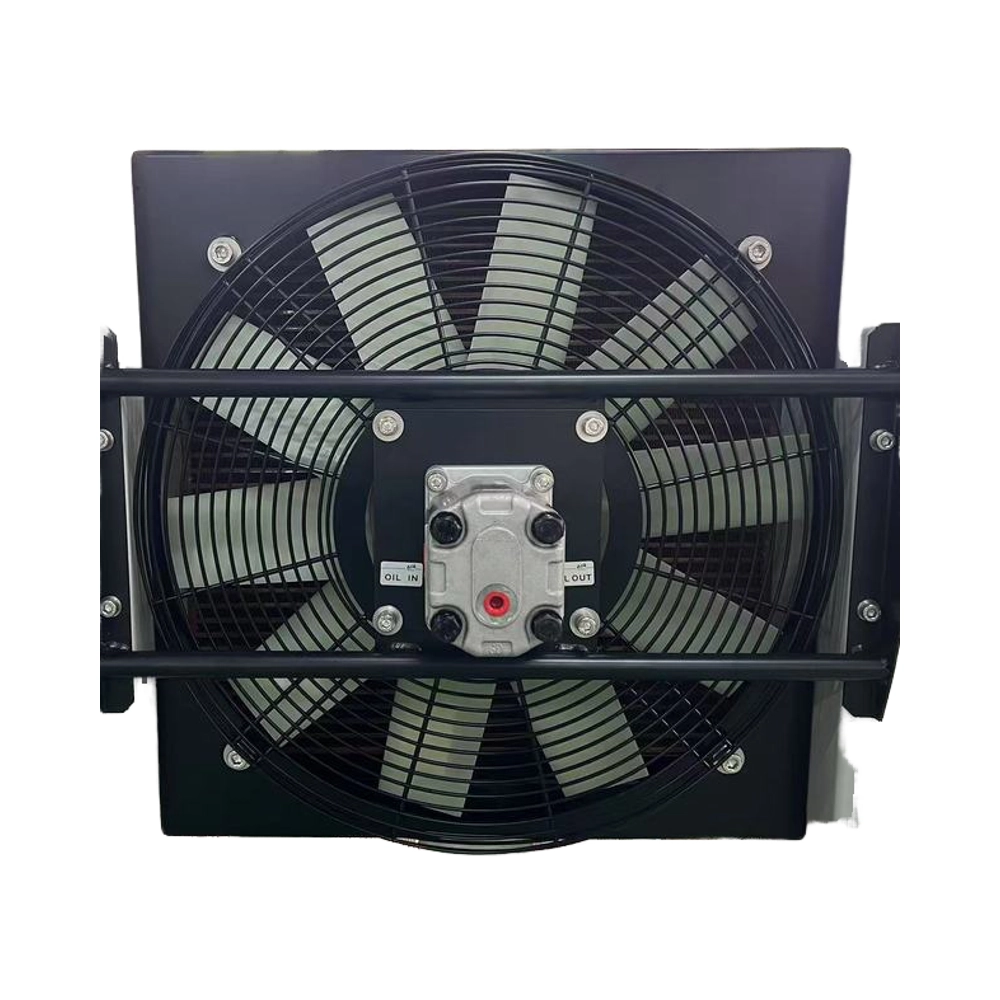

This technical guide examines 3000BTU hydraulic oil cooling solutions for CNC machine tools, focusing on counter-flow heat exchanger technology, energy efficiency metrics, and integration requirements for industrial hydraulic systems operating under continuous thermal loads. Modern CNC machining centers generate substantial heat through hydraulic power units, with oil temperatures often exceeding 60°C during sustained operations. This cooling system addresses thermal management challenges in precision manufacturing environments where temperature fluctuations of ±2°C can compromise dimensional accuracy and accelerate component wear. The analysis covers heat transfer optimization, capacity matching protocols, and compliance frameworks relevant to industrial cooling equipment procurement.
Hydraulic Oil Cooling Technology Fundamentals
Counter-Flow Heat Exchange Principles in CNC Applications
Counter-flow heat exchangers achieve superior thermal efficiency by directing hot hydraulic oil and cooling water in opposite directions through parallel channels. This configuration maximizes the temperature differential across the heat transfer surface, enabling a logarithmic mean temperature difference (LMTD) 15-20% higher than parallel-flow designs. In CNC applications, this translates to:
- Enhanced Heat Transfer Coefficient: Turbulent flow regimes in both fluid circuits maintain coefficients between 850-1200 W/m²K, depending on flow velocities and fluid properties
- Compact Footprint: Higher thermal effectiveness allows 30-40% smaller heat exchanger cores compared to cross-flow alternatives at equivalent cooling capacities.
- Thermal Gradient Control: Exit temperatures for both fluids approach inlet conditions, with approach temperatures as low as 3-5°C in optimized designs
The dual-circuit system separates contaminated hydraulic oil from clean cooling water through corrosion-resistant barriers, typically constructed from brazed aluminum plates or copper-nickel alloys. This isolation prevents cross-contamination while facilitating rapid heat dissipation through high-conductivity materials. For hydraulic systems operating with ISO VG 32-68 oils at flow rates of 40-80 L/min, counter-flow exchangers maintain oil viscosity within optimal ranges (25-50 cSt at operating temperature), critical for servo valve response times under 50 milliseconds.
3000BTU Capacity Specification and Load Matching
The 3000BTU/h (879W) cooling capacity designation represents the system’s heat removal rate under standardized test conditions—typically 35°C ambient temperature with 50°C hydraulic oil inlet temperature. Accurate load matching requires calculating actual thermal loads:
Thermal Load Formula: Q = ṁ × Cp × ΔT
Where:
- Q = Heat load (W)
- ṁ = Hydraulic oil mass flow rate (kg/s)
- Cp = Specific heat capacity (1.88-2.1 kJ/kg·K for mineral oils)
- ΔT = Temperature rise across hydraulic system (K)
For a typical 15kW CNC hydraulic power unit operating at 75% efficiency, approximately 3.75kW (12,800 BTU/h) converts to heat. However, duty cycle considerations reduce effective loads—a 40% duty cycle machining operation requires only 5,120 BTU/h average cooling capacity. The 3000BTU unit suits:
- Small-to-medium CNC lathes (spindle power ≤10kW)
- Hydraulic clamping systems with intermittent operation
- Auxiliary cooling for lubrication circuits
Ambient temperature compensation becomes critical above 30°C, where cooling capacity degrades 8-12% per 5°C increase. Manufacturers must apply derating factors: multiply nominal capacity by 0.88 for 35°C environments, 0.76 for 40°C conditions.
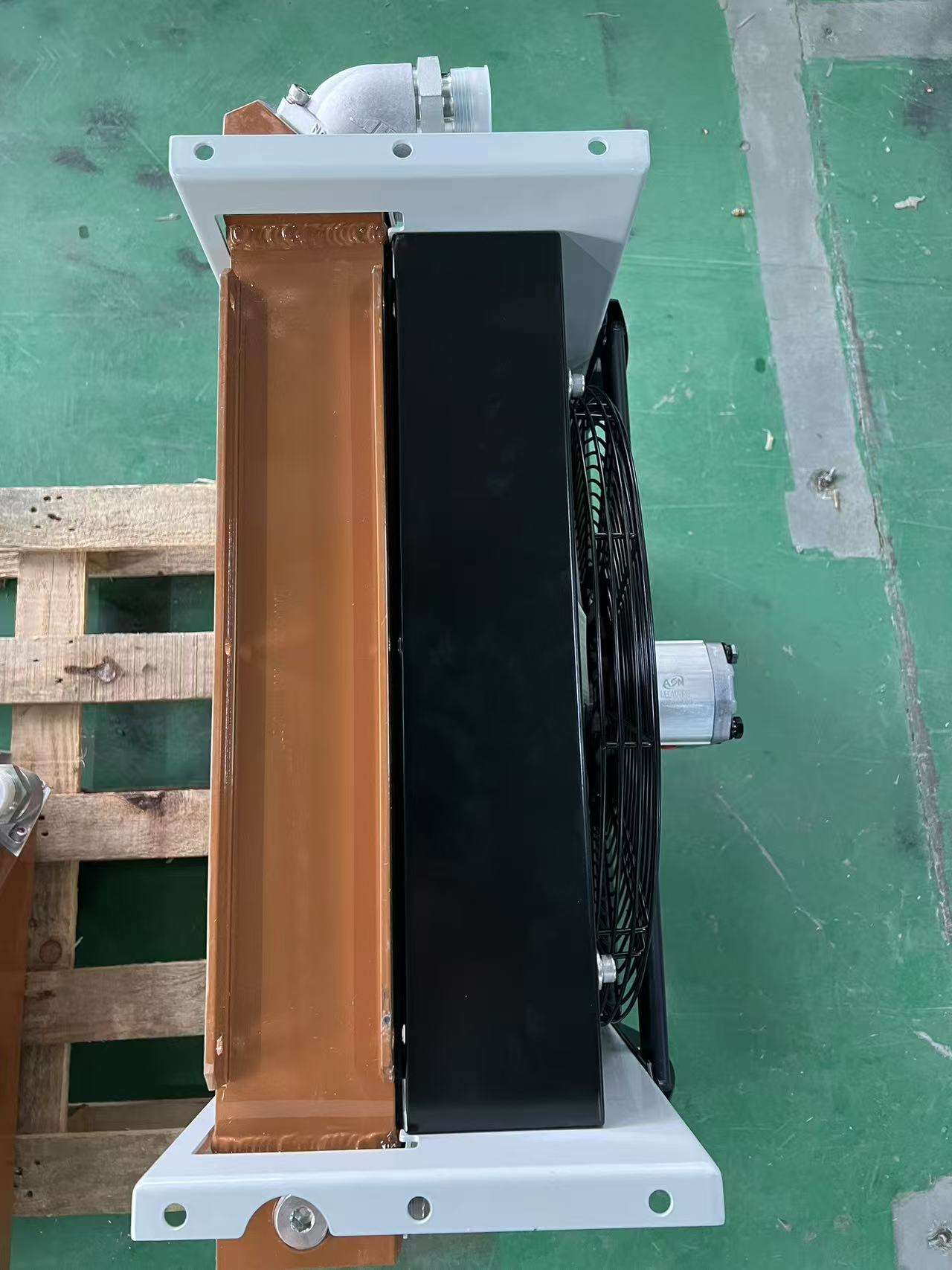
Technical Parameters and System Integration
Core Performance Specifications
Cooling Capacity Range: The 3000BTU baseline scales through multi-unit configurations or variable-speed operation. Single-unit systems effectively manage 2.5-3.5kW thermal loads, with capacity modulation achieved via:
- Fan speed adjustment (40-100% capacity range)
- Water flow rate variation (requires proportional valve control)
- Staged compressor operation in refrigerant-based hybrid systems
Operating Pressure Limits: Hydraulic circuit side withstands 10-16 bar continuous pressure, with 25 bar peak ratings for transient spikes. Water circuit operates at 2-4 bar, sufficient for closed-loop cooling towers or municipal supply integration. Pressure drop across the heat exchanger typically measures 0.3-0.8 bar at rated flow, requiring pump head calculations to account for system resistance.
Compatibilità con i fluidi: Designed for mineral-based hydraulic oils meeting ISO 11158 (HM category) and ISO 12925 (HV category for wide temperature ranges). Compatible viscosity grades span ISO VG 32 to VG 68, covering 90% of industrial hydraulic applications. Synthetic esters and polyglycol fluids require consultation due to differing thermal properties and seal compatibility.
Power Consumption Benchmarks: Electrical input ranges 0.45-0.75kW depending on fan configuration and control sophistication. Energy Efficiency Ratio (EER) typically achieves 4.0-5.2, meaning 4-5.2 watts of cooling per watt of electrical input. Premium models with EC fan motors and optimized heat exchanger geometry reach EER values of 6.5.
Installation and Piping Requirements
Mounting Configurations: Three standard arrangements accommodate diverse factory layouts:
- Vertical Wall-Mount: Saves floor space, requires structural support for 45-65kg unit weight plus fluid mass
- Horizontal Floor-Stand: Simplifies maintenance access, demands 600×800mm footprint clearance
- Integrated Tank-Top: Direct mounting on hydraulic reservoirs up to 200L capacity, minimizes piping runs
Inlet/Outlet Sizing Standards: Hydraulic connections utilize NPT 3/4″ or G3/4″ threaded ports, matching ISO 6149 straight thread specifications. Undersized piping induces velocity-related pressure drops—maintain flow velocities below 2.5 m/s in suction lines, 4.5 m/s in return lines. Water circuit employs 1/2″ or 3/4″ connections depending on flow requirements (8-15 L/min typical).
Filtration Prerequisites: Install 10-25μm return line filters upstream of the cooler to prevent heat exchanger fouling. Particle contamination above ISO 18/16/13 cleanliness codes reduces thermal efficiency by 15-20% within 6 months. Water circuits require 50-100μm strainers to trap scale and sediment.
Electrical Specifications: Single-phase 230VAC or three-phase 400VAC power supplies with dedicated 10A circuit protection. Control interfaces include:
- 4-20mA analog inputs for temperature setpoint adjustment
- Dry contact relay outputs for alarm signaling
- RS485 Modbus RTU communication (optional for SCADA integration)
| Parameter | 3000BTU Standard | 3000BTU Premium | 5000BTU Industrial |
|---|---|---|---|
| Cooling Capacity (BTU/h) | 3000 | 3000 | 5000 |
| Hydraulic Flow Rate (L/min) | 40-60 | 40-80 | 80-120 |
| Pressure Drop (bar) | 0.6 | 0.4 | 0.5 |
| Power Input (kW) | 0.65 | 0.55 | 0.95 |
| Noise Level (dB) | 58 | 52 | 62 |
| Temperature Control (°C) | ±3 | ±1.5 | ±2 |
| IP Protection Rating | IP54 | IP55 | IP65 |
Industrial Application Scenarios
CNC Machining Centers and Hydraulic Press Systems
Spindle Cooling Integration: High-speed machining spindles (12,000-24,000 RPM) generate 2-4kW thermal loads in bearings and motor windings. While dedicated spindle chillers handle primary cooling, hydraulic oil coolers manage auxiliary systems:
- Tool changer hydraulic actuators (0.5-1.5kW load)
- Automatic pallet changers (0.8-2kW intermittent)
- Hydraulic counterbalance systems for Z-axis assemblies
The 3000BTU unit maintains hydraulic oil at 40-45°C, preventing viscosity drift that compromises servo valve precision. Temperature stability within ±2°C ensures repeatable tool clamping forces (±3% variation) and positioning accuracy below 10μm over 8-hour production runs.
Hydraulic Power Unit Thermal Management: Centralized HPUs serving multiple CNC machines benefit from dedicated cooling loops. A 200L reservoir with 15kW pump capacity requires 8,000-10,000 BTU/h cooling under full load. Deploying three 3000BTU units in parallel provides:
- Redundancy for continuous operation during maintenance
- Staged capacity control matching load variations
- Distributed heat rejection reduces localized ambient temperature rise
Precision Temperature Control Requirements: Aerospace and medical device manufacturing demand oil temperature stability within ±1°C. This necessitates proportional-integral-derivative (PID) control algorithms with 0.1°C resolution sensors. Premium cooler models incorporate:
- Platinum RTD temperature probes (Class A accuracy)
- Variable-frequency drive (VFD) fan control with 1Hz resolution
- Predictive algorithms compensating for ambient temperature fluctuations
Heavy-Duty Manufacturing Environments
Continuous Operation Scenarios: Automotive stamping lines and steel processing equipment operate 24/7 with minimal downtime. Cooler reliability requirements include:
- Mean Time Between Failures (MTBF) exceeding 50,000 hours
- Hot-swappable fan assemblies for maintenance without system shutdown
- Dual-redundant temperature sensors prevent false shutdowns
Thermal cycling resistance becomes critical—heat exchangers must withstand 500+ thermal cycles (20-60°C range) without joint fatigue or leakage. Brazed aluminum cores outperform gasketed plate designs in cyclic durability.
Dust/Contamination Resistance: Foundries, woodworking facilities, and mineral processing plants expose cooling equipment to airborne particulates. Protective measures include:
- Washable aluminum mesh pre-filters (25-40 mesh count)
- IP65-rated enclosures with sealed cable glands
- Epoxy-coated condenser coils resisting corrosive atmospheres
Fan blade geometry optimized for dust-laden air maintains 85% airflow efficiency even with 3mm dust accumulation on coils, compared to 60% degradation in standard designs.
Ambient Temperature Challenges (>40°C): Steel mills and glass manufacturing plants present 45-55°C ambient conditions. High-temperature variants incorporate:
- Oversized condenser coils (30% additional surface area)
- High-static pressure fans (250-350 Pa external resistance capability)
- Insulated hydraulic lines prevent heat gain in supply piping
Capacity derating at 50°C ambient reaches 35-40%, necessitating 4500-5000 BTU nominal units to deliver effective 3000BTU cooling.
Energy Efficiency and Compliance Standards
Energy-Saving Design Features
Variable Speed Fan Control: EC (electronically commutated) motors with integrated VFDs reduce energy consumption 40-60% compared to fixed-speed AC induction fans. Control strategies include:
- Proportional cooling: Fan speed modulates linearly with temperature deviation from setpoint
- Adaptive algorithms: Machine learning adjusts response curves based on load history
- Ambient compensation: Fan speed increases preemptively during daytime temperature rises
Annual energy savings for a 0.65kW cooler operating 6000 hours/year at 60% average load: 1560 kWh, equivalent to €280-350 at industrial electricity rates.
Intelligent Thermostat Systems: Microprocessor-based controllers optimize start-stop cycles and setpoint management:
- Differential gap control prevents short-cycling (minimum 3-minute off periods)
- Night setback modes raise temperature targets 5°C during unmanned shifts
- Predictive start algorithms begin cooling 15-30 minutes before scheduled production
Standby Mode Power Reduction: Advanced units consume <5W in standby through:
- Switched-mode power supplies replacing linear transformers
- Sleep mode disables display backlighting and non-essential circuits
- Wake-on-LAN functionality for remote activation via building management systems
Regulatory and Safety Certifications
CE Marking Requirements: Compliance with EU Machinery Directive 2006/42/EC and Low Voltage Directive 2014/35/EU mandates:
- Risk assessment documentation per ISO 12100
- Technical construction file including hydraulic circuit schematics
- Declaration of Conformity signed by authorized representative
Electromagnetic compatibility testing per EN 61000-6-2 (immunity) and EN 61000-6-4 (emissions) ensures interference-free operation near CNC controllers and servo drives.
IP Protection Ratings: Ingress Protection codes define dust and water resistance:
- IP54: Suitable for clean machine shops (limited dust, splash-proof)
- IP55: Standard for general manufacturing (dust-protected, low-pressure water jets)
- IP65: Required for washdown environments and outdoor installations
Refrigerant Regulations: Hybrid systems using R134a or R410A refrigerants must comply with the EU F-Gas Regulation 517/2014, requiring:
- Leak detection systems for charges >5kg CO₂ equivalent
- Certified technician installation and service
- Electronic logbooks tracking refrigerant quantities
Electrical Safety Standards: IEC 60204-1 compliance ensures:
- Emergency stop integration capability
- Proper grounding and fault current protection
- Control circuit voltage limitation (≤50VAC or safety extra-low voltage)
UL 508A certification facilitates North American market access, addressing NFPA 79 industrial machinery electrical requirements.
Strategic selection of hydraulic oil cooling systems requires balancing thermal capacity, energy consumption, and integration complexity—3000BTU counter-flow chillers provide a proven solution for mid-range CNC applications demanding reliable temperature control within industrial compliance frameworks. The counter-flow heat exchanger topology delivers 15-25% efficiency advantages over alternative designs, while modular installation options accommodate diverse factory layouts from compact machine shops to large-scale manufacturing cells. Energy-saving features, including variable-speed fans and intelligent thermostats, reduce operational costs 40-60% compared to legacy fixed-speed systems, with payback periods under 18 months at typical industrial electricity rates. Compliance with CE marking, IP protection standards, and IEC electrical safety requirements ensures global market acceptance and insurance approval. For manufacturers prioritizing equipment uptime and precision thermal management, these cooling systems represent a critical investment in hydraulic system longevity and dimensional accuracy maintenance across extended production runs.