


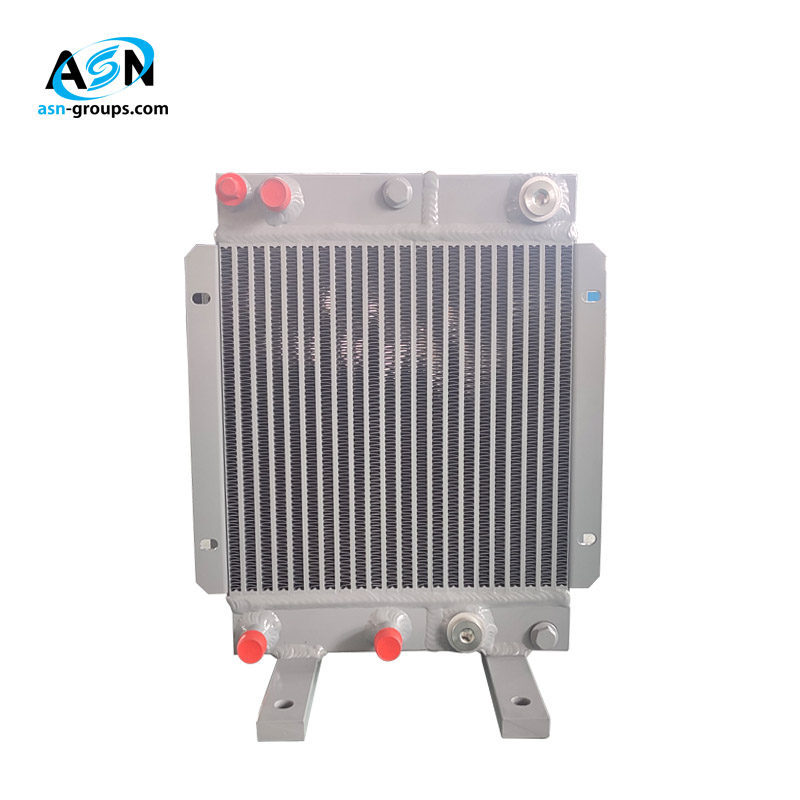

In the industrial world, heat is a common byproduct. Every time air is compressed, its temperature increases significantly; this often leads to equipment damage, reduced lubrication, and decreased efficiency. This is the location of the Raffreddatore per compressori d'aria that is essential.
By transferring excess heat to the air, an air compressor that is cooler than other systems will ensure that the system is within the safe range of temperatures. This will protect the components from overheating and will consistently produce fresh, dry, and efficient air. Whether it’s a manufacturing facility, an automotive repair facility, or a heavy-duty mining operation, air compressor coolers are the unacknowledged heroes responsible for maintaining stable pressure.
What Is an Air Compressor Cooler?
An Air Compressor Cooler, which is sometimes called an air compressor aftercooler or air compressor heat exchanger, is a device that takes away the excess heat that is generated during the air compression process.
When air is pressured, its volume is reduced and its temperature is increased. This hot, compressed air can lead to a variety of problems if it’s not treated properly — from the corrosion of pipelines to a decreased performance of downstream devices. The cooler is responsible for regulating the temperature; it employs water, oil, or air as a medium for heat extraction before the pressure is transferred to storage tanks or other tools.
In short, the air compressor cooler:
-
Protects system components by maintaining optimal operating temperature.
-
Prevents moisture condensation in the pipeline by lowering the air temperature.
-
Improves efficiency and extends the service life of both the compressor and accessories.
By achieving thermal balance, the cooler ensures that air delivered to the end application is cleaner, drier, and more energy-efficient.
How an Air Compressor Cooler Works
At the core, a cooler that uses air as its working fluid operates on a simple physical principle: the heat is transferred by conduction and convection.
When hot air is pressured through the cooler’s internal passages or tubes, it encounters a cooling medium ( either ambient air, water, or oil). The heat is naturally transferred from the hot compressed air to the cooler medium, which reduces the temperature of the air before it progresses to the next step of the process.
The Cooling Process in Detail
-
Compression Phase: Air is compressed by the compressor’s piston or screw element, generating heat that can reach 150°C or more.
-
Cooling Entry: The hot air exits the compressor and enters the cooler’s heat exchanger core.
-
Heat Exchange: Inside the cooler, a thermal gradient allows heat energy to transfer from compressed air to the cooling medium.
-
Condensation Control: As the temperature drops, moisture in the air condenses and can be separated using a moisture separator.
-
Discharge Phase: The cooled, drier air is then directed toward air storage tanks, dryers, or end-use equipment.
This efficient cycle allows the system to maintain safe operating temperatures and deliver high-quality compressed air at stable pressure.
Main Types of Air Compressor Coolers
Depending on application, installation environment, and cooling medium, air compressor coolers are generally classified into four major types.
Air-Cooled Compressor Cooler
This is the most common type used in small to medium-sized air systems. It uses ambient air, drawn by a fan, to cool the compressed air.
-
Advantages: Easy installation, no water supply required, low maintenance.
-
Applications: Workshops, portable compressors, and general-purpose machinery.
Water-Cooled Compressor Cooler
Used in large-scale industrial or marine systems, water-cooled designs employ circulating water to extract heat from compressed air.
-
Advantages: High cooling capacity, stable temperature control even in hot environments.
-
Applications: Continuous industrial production lines, power plants, and heavy equipment.
Oil-Cooled Air Compressor Heat Exchanger
In some systems, particularly oil-injected rotary screw compressors, the cooling function is integrated into an oil-cooled radiator system. The oil not only lubricates moving parts but also absorbs and transfers heat away efficiently.
-
Advantages: Compact design, efficient thermal management, extended component life.
-
Applications: Heavy-duty compressors, hydraulic systems, and mobile equipment.
Combined or Hybrid Cooling Systems
Some advanced compressors employ hybrid cooling that combines both air and water mediums, maximizing heat dissipation while maintaining compactness.
-
Advantages: Balanced performance and adaptability to diverse environments.
-
Applications: High-demand industrial environments and energy-efficient systems.

Key Components and Design Features
A modern industrial air compressor cooling system is an assembly of multiple carefully engineered components designed to work in harmony.
Key elements include:
-
Heat exchanger core: Typically made of aluminum or copper for superior thermal conductivity.
-
Cooling fins: Increase surface area for more effective heat dissipation.
-
Fan or blower system: Facilitates air movement across fins (in air-cooled designs).
-
Water jacket or oil channels: Enable efficient fluid circulation (in water or oil-cooled designs).
-
Temperature sensors and control valves: Automatically regulate flow and maintain stable operating temperatures.
High-quality designs also feature anti-corrosion coatings, vibration-resistant frames, and modular connections for easy maintenance or system upgrades.
Performance Factors and Efficiency Indicators
The performance of an air compressor cooler is determined by several measurable factors:
-
Heat Transfer Efficiency: The ability of the cooler to remove heat effectively per unit area.
-
Pressure Drop: A lower pressure drop indicates minimal flow resistance, improving system efficiency.
-
Thermal Conductivity of Material: Aluminum alloys are preferred for their lightweight yet high heat transfer capacity.
-
Cooling Medium Temperature: The lower the cooling medium temperature, the higher the heat transfer rate.
-
Ambient Conditions: High ambient temperatures may reduce the performance of air-cooled models.
In advanced systems, performance is optimized by using variable-speed fans, intelligent thermal control, and optimized fin geometry to maximize the cooling coefficient while minimizing power consumption.
Applicazioni in tutti i settori
The air compressor cooler is not limited to one field — its role is cross-industrial and mission-critical. Common application sectors include:
-
Manufacturing plants: To maintain efficiency in pneumatic tools and automated systems.
-
Mining and construction: Where high ambient temperatures demand durable, oil-cooled heat exchangers.
-
Automotive workshops: Ensuring reliable compressed air for painting, sanding, and assembly.
-
Food and beverage industry: For maintaining clean, dry air in packaging or bottling processes.
-
Marine and offshore applications: Using corrosion-resistant, water-cooled coolers for marine compressors.
-
Renewable energy and heavy equipment: Supporting turbine maintenance systems and hydraulic operations.
Wherever compressed air is used, reliable cooling defines the boundary between efficiency and system failure.
How to Choose the Right Air Compressor Cooler
Selecting the correct cooler for your air system requires understanding both technical and environmental conditions. Key selection criteria include:
-
Compressor Capacity (CFM): The cooler should match or exceed the air flow of the compressor.
-
Operating Pressure and Temperature: Choose a cooler rated for your maximum pressure and expected heat load.
-
Installation Environment: Air-cooled units work best in open, well-ventilated areas, while water-cooled systems are suitable for enclosed or high-temperature sites.
-
Maintenance Accessibility: Look for modular designs with easy-to-clean fins or detachable filters.
-
Energy Efficiency: Systems with thermostatic control or variable-speed fans can reduce operating costs significantly.
By balancing these factors, you ensure long-term reliability, minimal downtime, and optimized performance of your air compression setup.
Manutenzione e risoluzione dei problemi
Like all mechanical systems, air compressor coolers require regular maintenance to perform efficiently.
Routine Maintenance Tips
-
Inspect fins or tubes for dust, oil, or scale buildup — clean regularly to maintain airflow.
-
Check for leaks in water or oil lines to prevent pressure loss and contamination.
-
Monitor temperature differentials between the inlet and outlet to detect early signs of fouling.
-
Ensure fans and pumps operate smoothly and without vibration.
-
Replace filters and seals according to the manufacturer’s intervals.
Common Troubleshooting Issues
| Problem | Possible Cause | Recommended Action |
|---|---|---|
| Insufficient cooling | Dirty fins or reduced water flow | Clean surfaces or restore fluid flow |
| Pressure drop | Blocked air passages | Remove obstructions, check for leaks |
| Overheating alarm | Fan failure or sensor error | Inspect the fan motor and the temperature sensor |
| Oil contamination | Heat exchanger leak | Isolate and repair the damaged core |
Preventive maintenance not only reduces repair costs but also ensures consistent compressed air quality and system uptime.

Innovation Trends and Future Development
The field of air compressor cooling technology is evolving rapidly alongside global trends in energy conservation and intelligent manufacturing.
Modern systems are integrating:
-
Smart thermal management with IoT sensors and predictive diagnostics.
-
Lightweight aluminum microchannel heat exchangers offering higher heat transfer rates.
-
Hybrid oil-water cooling for ultra-efficient high-load compressors.
-
Noise-reduction designs and low-carbon refrigerant alternatives for environmentally conscious operations.
-
Recycling heat recovery systems, where waste heat from compressors is reused for facility heating or pre-heating industrial fluids.
These innovations mark a significant step toward sustainable, energy-smart air systems that align with the goals of modern Industry 4.0.
Cooling That Sustains Industrial Efficiency
In every air system that is compressed, temperature control has a significant impact on reliability. An Air Compressor Cooler is more than just a supplemental device: it’s a fundamental component of efficiency, safety, and cost.
From the smallest manufacturing unit to the largest industrial storage device, coolers are responsible for ensuring that compressed air is stored at a consistent temperature and pressure. This prevents the downstream processes from being adversely affected.
With the advancement of air conditioning aftercooler design, oil-conditioned radiators, and intelligent air cooling technology, the future is expected to have systems that are smaller, more efficient, and environmentally responsible.
When selected with care and maintained properly, an air compressor cooler has more than just a simple effect on the life of the equipment: it also increases productivity, decreases costs, and helps to keep the future of industrial energy management sustainable.