


Heavy-duty trucks live hard lives. They haul overloaded trailers up mountain grades, idle for hours in congested ports, crawl through construction zones in summer heat, and cross deserts where ambient temperatures punish every mechanical component. Under these conditions, heat is not a side effect. It is the central adversary.
When engine temperatures climb beyond optimal thresholds, lubrication degrades, friction increases, oxidation accelerates, and wear compounds. In long-haul logistics, thermal instability is not just a maintenance issue — it is an operational cost multiplier.
This is where the DC 오일 쿨러 moves from being an accessory to becoming a strategic component of thermal management. In heavy-duty truck cooling systems, independent electric-driven oil cooling is no longer a luxury upgrade. In many operating environments, it is essential.
To understand why, we need to look at how heat behaves inside a working diesel engine, how traditional cooling systems are structured, and what changes when an independently powered 12/24V DC oil cooling system is introduced.
The Thermal Reality of Heavy-Duty Truck Engines
A heavy-duty diesel engine operates under sustained load. Unlike passenger cars that alternate between acceleration and rest, commercial trucks often maintain high torque output for extended periods. Every combustion cycle generates intense heat. Only a fraction becomes mechanical work. The rest must be managed.
Heat in an engine comes from three main sources:
-
Combustion chamber temperatures exceeding 2,000°C
-
Friction between moving metal components
-
Turbocharging systems increase air compression and exhaust temperatures
While coolant systems manage block and cylinder temperatures, engine oil carries a significant share of thermal responsibility. Oil lubricates bearings, pistons, camshafts, and gears — but it also absorbs and transports heat away from these components.
As oil circulates, its temperature rises. If it exceeds safe operating limits, its viscosity drops. When viscosity drops, the lubricating film thins. When the film thins, metal-to-metal contact increases. And when that happens, wear accelerates exponentially.
Heat compounds problems in a cascading fashion. Temperature increases the chemical breakdown of oil. Oxidation produces sludge. Sludge restricts flow. Restricted flow traps more heat.
The cycle feeds itself.
The Role of Engine Oil in Heat Management
Engine oil is not merely a lubricant. It functions as a thermal mediator.
In heavy-duty engines, oil performs three critical thermal roles:
-
Absorbing friction-generated heat from bearings and rotating assemblies
-
Carrying heat away from the piston undersides and valve components
-
Maintaining stable viscosity under fluctuating loads
Oil temperature directly influences lubrication stability. Most diesel engines operate optimally when oil temperatures remain within a controlled range. If oil runs too cool, it may not evaporate contaminants efficiently. If it runs too hot, viscosity collapses.
Prolonged overheating causes:
-
Oil thinning and pressure drop
-
Seal degradation
-
Increased crankshaft and bearing wear
-
Turbocharger lubrication failure
In fleet operations, these consequences translate into downtime, repair costs, and loss of route reliability.
Thermal control is not optional in heavy-duty transport. It defines engine longevity.
What Is a DC Oil Cooler and How Does It Work?
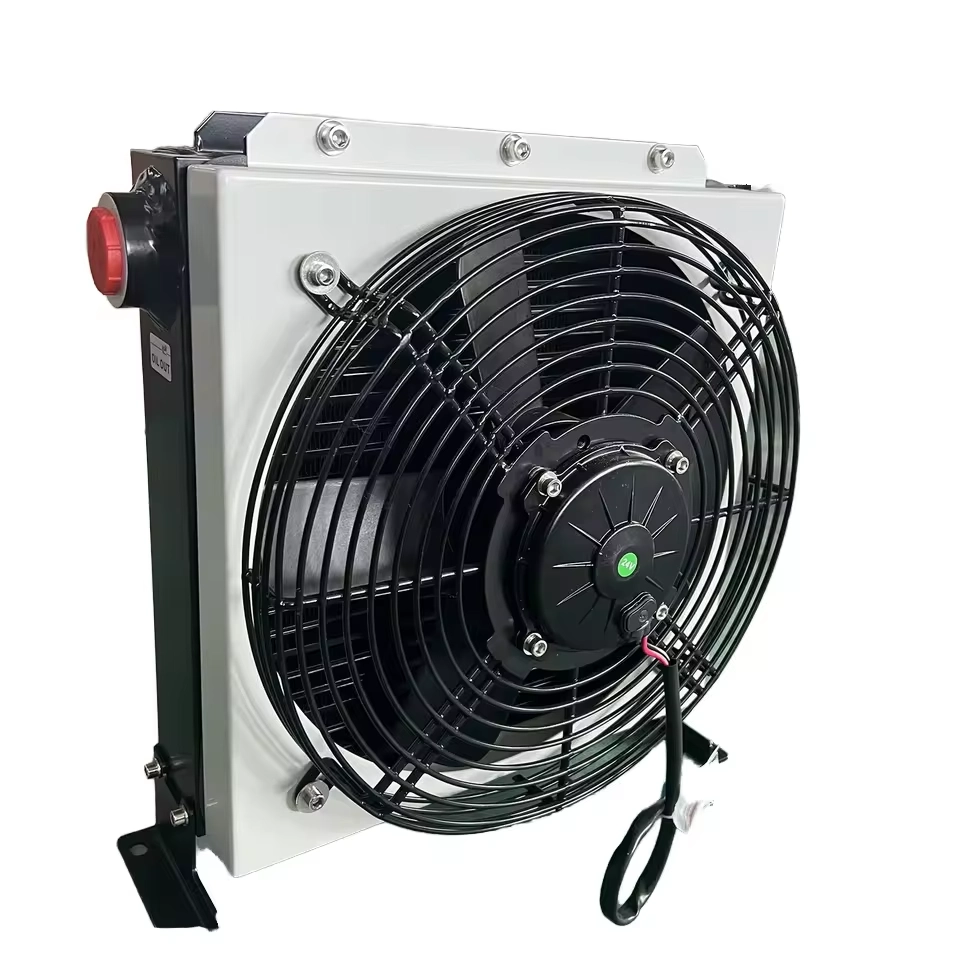
A DC 오일 쿨러 is an electrically powered heat exchange unit designed to reduce engine oil temperature independently of the primary cooling system. In heavy trucks, these units typically operate on 12V or 24V DC systems, depending on the vehicle’s electrical architecture.
A standard unit includes:
-
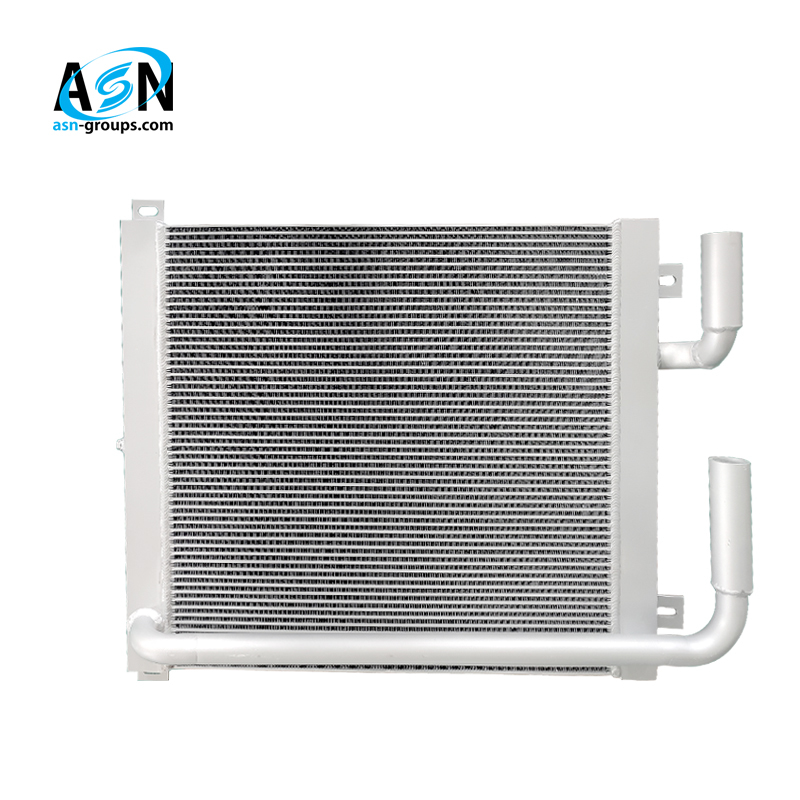
An aluminium fin plate heat exchanger core
-
Integrated or attached DC electric cooling fans
-
Oil inlet and outlet channels
-
Mounting brackets and vibration-resistant housing
The operating principle is straightforward but effective. Hot engine oil flows through the internal channels of the aluminium core. The fin plate structure dramatically increases surface area. As air passes over the fins — driven by the DC fan — heat transfers from the oil to the surrounding air through conduction and forced convection.
Unlike belt-driven mechanical cooling systems, a DC oil cooler operates independently of engine RPM. This independence changes everything.
To understand the difference clearly:
| Cooling Type | Power Source | Control Flexibility | Installation Flexibility | Performance at Idle |
|---|---|---|---|---|
| Mechanical Oil Cooling | Engine-driven belt | Limited | Fixed near the engine | Reduced efficiency |
| DC 오일 쿨러 | 12/24V electric motor | Adjustable | Flexible mounting options | Stable performance |
Mechanical systems depend on engine speed. At idle — precisely when airflow is lowest, and heat buildup can occur in traffic — mechanical cooling efficiency drops. A DC oil cooler maintains airflow regardless of engine RPM.
Electric independence introduces thermal stability across varied operating conditions.
Why Traditional Cooling Systems Are No Longer Enough
Heavy-duty trucking environments have evolved. Cooling systems designed decades ago did not account for modern stress factors.
Several realities challenge conventional cooling setups:
-
Stricter emission standards are increasing exhaust gas recirculation temperatures
-
Higher torque output from downsized turbocharged engines
-
Extended idling for logistics operations
-
Extreme climate operations, from desert heat to tropical humidity
-
Modified or upfitted vehicles carrying auxiliary equipment
In mountainous terrain, thin air reduces natural cooling efficiency. In urban traffic, airflow drops dramatically. In high-ambient environments, the thermal gradient between oil and air narrows, slowing passive heat exchange.
Traditional integrated cooling systems struggle under these compounded stressors.
An independent DC oil cooler acts as a supplemental system. It does not replace primary cooling; it reinforces it. It adds thermal redundancy and responsiveness where mechanical systems lose efficiency.
Heat management becomes proactive instead of reactive.
Key Advantages of a DC Oil Cooler in Heavy Trucks
The essential nature of a DC oil cooler becomes clearer when examining its operational advantages.
Independent Cooling Control
Because the cooler operates via an electric motor, airflow is not tied to engine RPM. This allows consistent performance during idle, slow traffic movement, or stationary operation. Temperature sensors can also be integrated to activate the system only when needed, improving efficiency.
Stable Performance Under Low-Speed Conditions
Heavy trucks often idle at loading docks or during long waits. Mechanical cooling systems rely on engine speed to generate airflow. A DC oil cooler maintains constant air movement across the heat exchanger regardless of engine activity.
Improved Fuel Efficiency
Overheated engines operate less efficiently. Oil thinning increases friction losses. Maintaining optimal oil temperature helps stabilize internal resistance and reduce parasitic load. While the energy draw of the electric fan is measurable, the net balance often favors improved operational efficiency in sustained heavy use.
Extended Engine Lifespan
Lower peak oil temperatures reduce oxidation and viscosity breakdown. This slows wear rates across bearings and turbochargers. For fleet operators, even modest lifespan extension across dozens or hundreds of vehicles compounds into significant financial savings.
These advantages are not theoretical. They emerge from fundamental thermodynamics and mechanical wear principles.
Aluminium Fin Plate Heat Exchanger Design: Why It Matters
Material choice determines thermal efficiency.
Aluminium is widely used in oil coolers because of its high thermal conductivity relative to weight. It transfers heat rapidly while remaining lightweight enough for vehicle integration.
The fin plate structure further enhances performance. By increasing exposed surface area, the design maximizes heat exchange with moving air. More surface area equals more opportunity for thermal transfer.
For heavy-duty applications, structural durability is equally critical. Trucks operate under constant vibration. Poorly constructed heat exchangers risk fatigue cracking or leakage.
An aluminium fin plate core designed for heavy trucks must balance:
-
High thermal conductivity
-
Corrosion resistance
-
Vibration tolerance
-
Structural rigidity
-
Lightweight integration
Heat exchange efficiency is not solely about cooling capacity. It is about sustained performance under stress.
12V vs 24V DC Oil Coolers: System Compatibility
Heavy-duty trucks typically use 24V electrical systems, while lighter commercial vehicles may operate on 12V.
Choosing between 12V and 24V DC oil coolers requires understanding:
-
Electrical architecture of the vehicle
-
Power consumption requirements
-
Current draw and wiring capacity
-
Compatibility with existing control systems
A 24V system generally allows lower current draw for equivalent power output, reducing cable heating and improving electrical stability in larger vehicles.
Installation must respect electrical load limits. Overloading circuits can introduce reliability risks.
Matching voltage is not a trivial detail. It is foundational to safe integration.
When Should a Heavy Truck Install an Additional DC Oil Cooler?
Not every truck requires supplemental cooling. However, certain operational conditions strongly justify it.
Installation becomes advisable when:
-
Frequent oil overheating occurs under load
-
The vehicle operates in consistently high ambient temperatures
-
Long-haul routes involve extended uphill grades
-
The engine has been modified or tuned for higher output
-
Fleet managers seek to reduce long-term maintenance costs
If oil temperature spikes repeatedly under similar conditions, that pattern signals insufficient thermal margin.
Adding a DC oil cooler increases that margin.
Maintenance and Long-Term Reliability
A DC oil cooler is not maintenance-free, but upkeep is straightforward.
Routine care includes:
-
Inspecting electrical connections
-
Cleaning debris from fins
-
Checking oil line seals
-
Monitoring fan operation
Because it operates independently, the system must remain electrically secure. Vibration-resistant mounting is essential.
When maintained properly, a well-built aluminium fin plate DC oil cooler can provide years of consistent thermal support.
Thermal Control Is Operational Control
In heavy-duty trucking, heat is an invisible expense. It erodes efficiency, shortens engine life, and increases downtime risk.
A DC 오일 쿨러 introduces independent, controllable thermal management into the system. By stabilizing oil temperature under varied loads and environmental conditions, it reinforces lubrication performance, protects internal components, and enhances overall reliability.
Traditional cooling systems were designed for earlier performance demands. Modern logistics, stricter emission standards, and sustained heavy loads require adaptive thermal strategies.
An electric-driven oil cooling system is not simply an upgrade. In many heavy-duty applications, it is essential.
In transport operations, temperature stability translates directly into mechanical stability. And mechanical stability translates into profitability.