
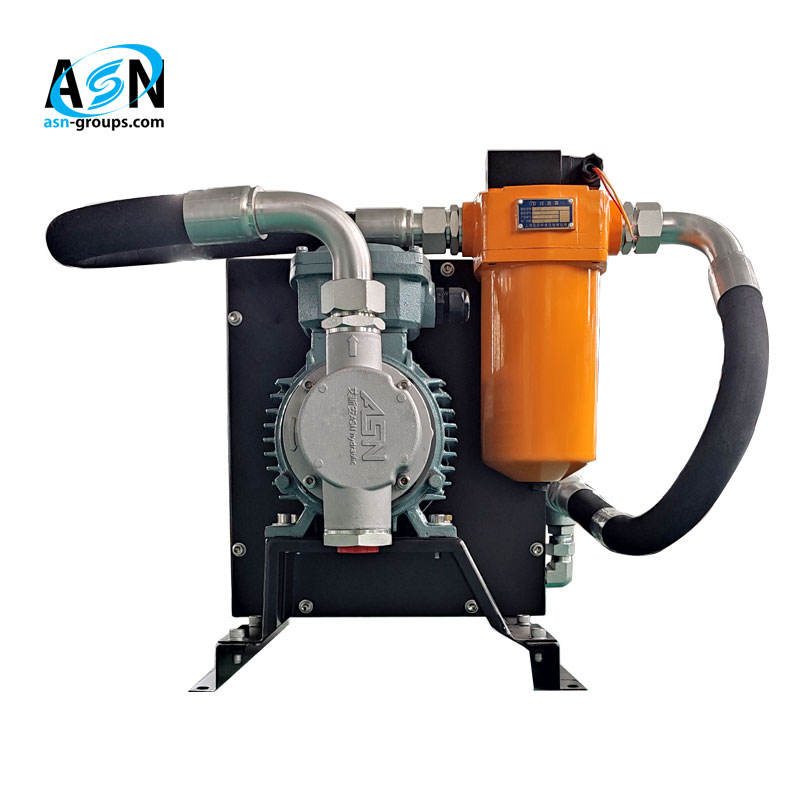



Effective temperature management is one of the most significant factors in the life span, consistency, and efficiency of mechanical machinery. As machines automate and equipment operates at higher concentrations, cooling systems are now a secondary concern, but are essential to the design of engineering. Among the various cooling solutions available today, the Self-Circulation Cooler is gaining popularity among engineers due to its energy-efficient, passive, and reliable nature.
The Role of Self Circulation Cooler in Industrial Equipment
Every industrial machine generates heat, and in most applications, this heat must be managed effectively to prevent component degradation, premature wear, thermal deformation, or system shutdowns. Pumps, compressors, motors, hydraulic stations, gear reducers, die casting equipment, and material-processing devices all share a common requirement: stable cooling.
Cooling technologies can generally be divided into several broad categories:
-
Forced air cooling
-
Water-based cooling
-
Oil-based cooling
-
Hybrid cooling systems
-
Passive and self-circulating cooling units
Forced solutions that utilise motion to generate power, such as generators and dedicated fans, are effective; however, they may increase the system’s complexity, energy expenditure, and maintenance requirements. Water-based coolers have a high thermal transfer rate, but they also pose a risk of corrosion, leakage, and poor water quality management. Oil-based forced circulation systems also necessitate power supplies, pumps, and additional components that may incur additional costs.
The Self Circulation Cooler is an alternative that is popular because it relies on the natural thermal gradient and fluid volume differences. This causes it to be extremely dependable, mechanically simple, and energy-efficient. It’s particularly beneficial in systems that have a long lifespan and are primarily concerned with stability and minimal maintenance.
What Is a Self Circulation Cooler
A Self Circulation Cooler is a device that exchanges thermal energy without the need for a pump. This is accomplished by means of a heat exchange. Instead of relying on powered components, it employs natural convection that is driven by temperature differences and fluid density changes. When the fluid temperature increases in the machinery, it will become heavier and will rise towards the colder area, where heat will be rejected. As the fluid temperature decreases, it becomes denser and flows back down into the system, creating a perpetual circulation loop.
This passive fluid movement is the defining characteristic of the Self Circulation Cooler. It means the system can operate:
-
Without a motor
-
Without a pump
-
Without a complex control system
-
Without external energy consumption
These qualities make the cooler extremely dependable, which is why it is often chosen for mission-critical mechanical applications.

How Self Circulation Cooling Works Inside the System
1. The equipment’s heat absorption capacity
The oil that is circulating in the system is responsible for absorbing the heat from mechanical components like wheels, hydraulics, bearings, or compressors. As the oil temperature increases, its consistency decreases.
2. Natural Increase in Pressure
The heavier, less frequent oil flow begins to migrate toward the cooler unit via the piping system. This movement is not dependent on pressure from the pump: the thermal gradient alone is responsible for the driving force.
3. Heat rejection in the cooling body
In the interior of the Self Circulation Cooler, the oil transfers heat to the fins or surfaces that exchange heat. Airflow is either natural or forced by a fan that is optional, the heat from the cooler’s exterior is removed, this lowers the oil temperature.
4. Cooling of the oil’s downward flow.
As the oil temperature decreases, it becomes more dense and flows downward toward the machinery, completing the cycle of circulation.
5. Constant Temperature Loop
The procedure is continuous and ensures a consistent temperature range and avoids overheating.
This complete automatic process lacks the need for mechanical power, electric power, or complex hydraulic systems.
Advantages of Self Circulation Coolers in Modern Machinery
The Self Circulation Cooler offers several key advantages that continue to make it relevant in industrial applications today.
1. No Energy Input from luar negeri
The most significant advantage is that the system is powered by no electricity or mechanical components. The entire loop of circulation is dependent on natural convection, this makes it both cost-effective and energy-saving.
2. Less Components with Mechanical Acceleration
Without a pump, the system avoids failures of the pump, reduced issues of flow, and maintains the rotation of parts. This increases the overall reliability greatly.
3. High Operational Safety
The lack of electrical components eliminates the risk of sparkling and decreases the probability of power issues or pump failure.
4. Extended Service Life
Because there are no dynamic components, the cooler has a longer lifespan than forced-circulation systems.
5. Low Sound and Vibration
The unit is silent because no engine or pump is employed; this is beneficial in environments with a high degree of noise sensitivity.
6. Large Environmental Similarity
It is effective across a broad range of temperatures and lacks the need for controlled water quality, unlike water conditioning systems.
7. Constant Cooling Efficiency
For applications that require a consistent load, the Self Circulation Cooler has a consistent thermal profile that decreases the temperature variance.
Key Components and Internal Structure
Although externally simple, a Self Circulation Cooler integrates several precisely engineered components designed to maximise thermal efficiency.
Heat Exchange Body
The core component is often constructed from aluminium alloy or copper-based materials to maximise thermal conductivity. Multi-layered channels or fins increase the surface area for heat dissipation.
Cooling Fins
Extended surfaces help accelerate heat transfer to the surrounding air. These may be arranged in straight, corrugated, or louvred patterns to optimise airflow.
Oil Routing Passages
Internal channels guide hot oil through the cooler while maximising contact with heat-exchange surfaces.
Connection Ports
Standardised inlet and outlet ports allow easy integration with industrial machinery. Port sizes vary depending on flow design and oil viscosity.
Mounting Frame or Bracket
Designed for easy installation, whether vertically or horizontally.
Optional Fan Assembly
Some Self Circulation Coolers can be equipped with a low-power fan to enhance airflow, particularly in confined spaces or high-temperature environments.
Thermal Reservoir Zones
Some designs include zones that stabilise flow patterns or reduce turbulence inside the unit.
The combination of these components ensures efficient natural convection and long-term reliability.
How a Self Circulation Cooler Compares to Traditional Cooling Systems
1. Versus Forced Oil Coolers
Forced coolers are composed of pumps, filters, and electrical components. They offer a high rate of flow, but are more intricate and expensive. Self-circulation coolers have a lower flow rate, but they are more dependable and have lower maintenance costs.
2. Contrasted with Water Coolers
Water refrigerators have a high heat transfer rate, but they pose a risk of corrosion and require water treatment. Self-circulation coolers are free of issues.
3. Contrasted with Air-Coled Radiators
Air-oled radiators are forced to move air. Self-circulation coolers have fans that are optional, but they can still operate completely passively.
4. Contrasting with Heat Pipes
Heat pipes have a high thermal efficiency, but they are limited by the volume of fluid and are more susceptible to internal fatigue. Self-circulating coolers have a longer lifespan for larger fluid systems.
Application Scenarios Where Self Circulation Coolers Excel
hydraulic power units
Raulic oil can reach a high temperature under heavy utilisation. A Self Circulation Cooler reduces the temperature of oil without supplementing a pump in the hydraulic system.
Gearboxes and Reducers
When components of the gear system operate permanently, heat accumulation may adversely affect the lubricants. Natural cooling is beneficial to gearing and extends the life of lubricants.
Construction Machinery
Excavators, cranes, drilling machines, and equipment for lifting all require consistent hydraulic performance. Self-Circulation Coolers have no additional electrical components.
Line manufacturing and processing.
In manufacturing lines that are automated and run all day, cold pauses are not tolerated. Passive coolers have a dependable reputation.
Wind Turbines
Maintenance is difficult in wind power plants. The long-term stability and passive nature of the Self Circulation Coolers makes them ideal for aircraft and mechanical systems that have no moving parts.
Seabed equipment
The oil refrigeration system for marine applications benefits from a corrosion-resistant, non-electrical structure.
Industrial Helpers
Compressors produce a continuous heat source, and a passive cooler decreases the thermal load without increasing the power consumption.
Engineering Considerations When Selecting a Self Circulation Cooler
Selecting the right Self Circulation Cooler is essential for ensuring the correct heat dissipation performance.
Heat Load Requirements
Engineers evaluate the system’s heat generation rate in kW or BTU to determine cooler size and fin density.
Oil Type and Viscosity
Oil viscosity affects the natural convection flow rate. Higher-viscosity oils may require larger channels or optional fan assistance.
Installation Position
Self Circulation Coolers operate best when installed at a height where natural circulation can be maintained. Vertical installation is preferred.
Ambient Airflow Conditions
Coolers work most effectively in areas with open air circulation. Confined spaces may require auxiliary fans.
Fluid Volume
Large systems may require coolers with greater internal capacity to maintain stable temperature cycles.
Long-Term Performance Benefits in Industrial Environments
The Self Circulation Cooler delivers a series of long-term advantages that support stable manufacturing and operational efficiency:
-
Reduced lubricant oxidation
-
Lower mechanical wear
-
Stabilised oil viscosity
-
Reduced downtime caused by overheating
-
Extended component life
-
Decreased operational cost
-
Improved reliability in continuous production
Because the cooler functions independently, it remains effective even when other parts of the system experience power fluctuations or control errors.
Why Industrial Engineers Continue to Choose Self Circulation Cooling
Ultimately, engineers often prioritise predictable performance and minimal intervention. The Self Circulation Cooler matches these expectations by offering:
-
Passive operation
-
Mechanical simplicity
-
High reliability
-
Low operational costs
-
Compatibility with many industrial systems
In environments that value efficiency over durability, the Self Circulation Cooler provides a compromise between the two that few other technologies can match up to.
The Self Circulation Cooler is more than simply a heat exchanger that transfers heat from one area to another; it’s a dependable thermal management solution that is engineered to have a long life cycle and operate in a difficult environment. By utilising natural convection and removing the necessity of power supplies or pumps, it provides a stable, maintenance-free cooling system that benefits the longevity of machinery and the safety of operation.
As industries seek to have greater efficiency, less maintenance, and lower energy consumption, the Self Circulation Cooler is recognised as a long-lasting, cost-effective, and sustainable choice for the design of modern equipment.