


Introduction
In hydraulic systems, heat is the enemy. An AC hydraulic oil cooler is essential for maintaining oil viscosity and extending component life. But should it go in the return line or as an offline bypass? Each approach affects reliability, cost, and maintenance differently. This article compares both configurations, helping you choose the right one for your application—whether you’re designing new equipment or upgrading existing hydraulics.
Return Line Cooling: How the AC Hydraulic Oil Cooler Works in the Main Circuit
Return line cooling is the most common installation method for an AC hydraulic oil cooler. In this configuration, the cooler is placed directly in the return line of the hydraulic system, just before the oil flows back into the reservoir. The fluid—already heated by doing work in cylinders, motors, and other actuators—passes through the cooler on its way back to the tank.
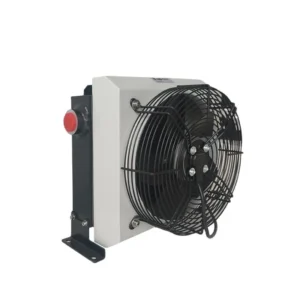
The AC hydraulic oil cooler itself typically consists of a fin‑plate heat exchanger core and an AC fan motor that draws ambient air across the finned surface. As hot oil travels through the core tubes, heat transfers from the fluid to the fins, and the fan dissipates that thermal energy into the surrounding atmosphere. No cooling water is required—just a reliable source of AC power and adequate airflow.
Why Return Line Cooling Is So Widely Used
The primary appeal of return line cooling is its simplicity. The system’s own return flow provides the motive force; no additional pump is needed. Installation is straightforward—plumb the AC hydraulic oil cooler into the return manifold, wire the fan motor, and you’re operational. The footprint is minimal, and the total cost of ownership is lower than that of more complex alternatives.
Return line cooling is particularly well‑suited for:
-
Industrial power units – compact, self‑contained systems where space is at a premium
-
Machine tools – applications with predictable, steady‑state heat loads
-
Lubrication systems – gearboxes and bearing circuits with moderate cooling demands
-
Cost‑sensitive projects – when budget constraints rule out the expense of a separate pump and motor
For many standard industrial applications, a return‑line‑mounted AC hydraulic oil cooler delivers perfectly adequate performance at an attractive price point.
The Hidden Risks: Pressure Spikes and Cold Starts
However, return line cooling isn’t without its vulnerabilities. The AC hydraulic oil cooler installed in the return path is exposed to whatever pressure exists in that line—typically low, but capable of spiking dramatically during certain events.
When a hydraulic system experiences a sudden stoppage, a stuck valve, or an emergency braking event, the return line pressure can surge instantaneously. These pressure spikes are the leading cause of cooler failure in return line installations. The aluminum core can burst, the brazed joints can crack, and suddenly your cooling system is down—along with your entire production line.
Cold starts present another hazard. At low ambient temperatures, hydraulic oil becomes thick and viscous, creating a high-pressure drop across the AC hydraulic oil cooler core. Without proper protection, that pressure differential can exceed the cooler’s rated capacity and cause catastrophic damage.
The Bypass Valve: Essential Protection for Any AC Hydraulic Oil Cooler
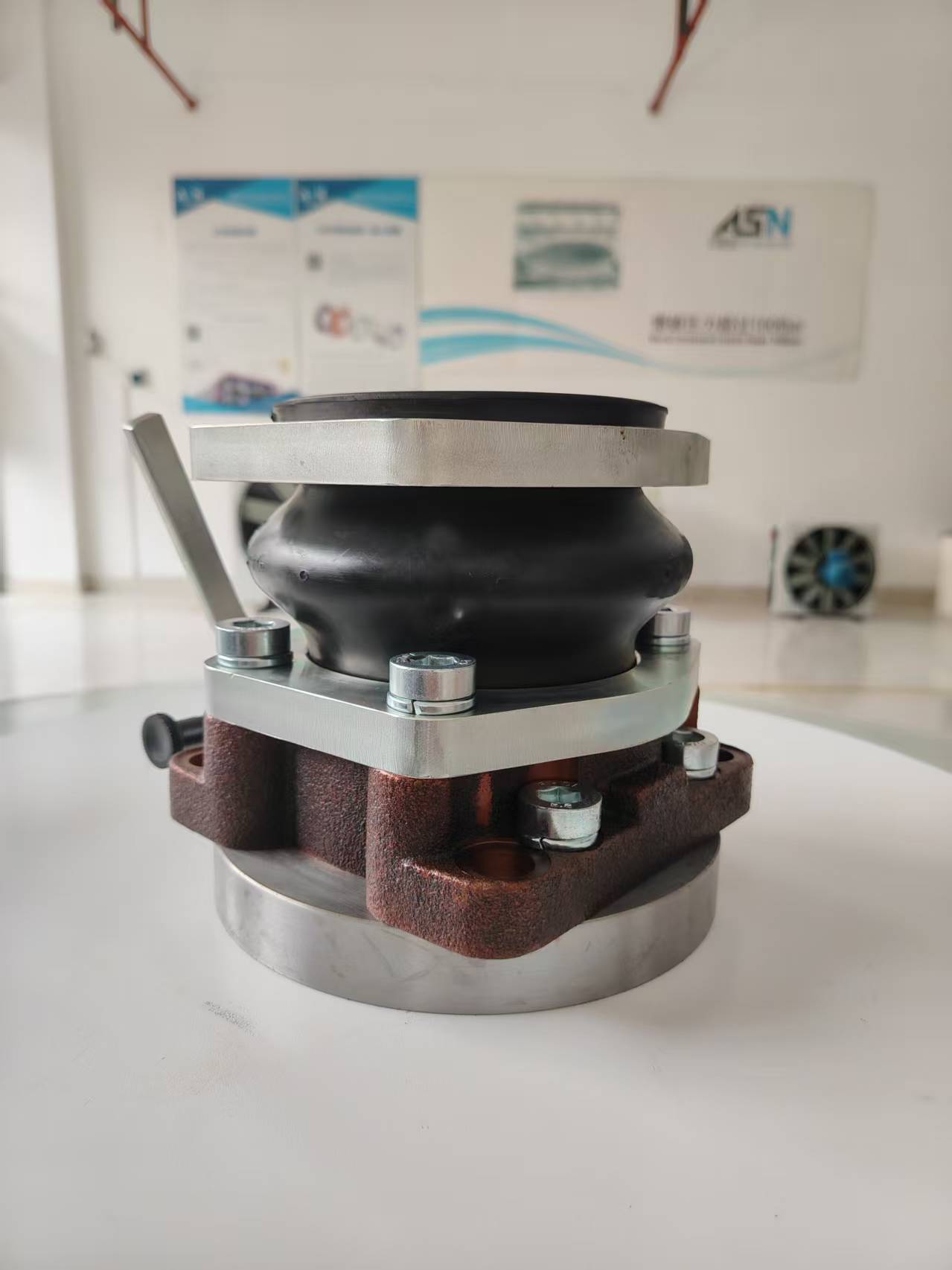
This is where the term “bypass” can be confusing. In a return-line system, you absolutely need a pressure bypass valve installed in parallel with the AC hydraulic oil cooler. This valve opens when the pressure differential across the cooler exceeds a set threshold—typically around 29 PSI (2 bar)—diverting oil around the core until conditions normalize.
The bypass valve protects the AC hydraulic oil cooler from three primary threats:
-
Pressure spikes during fault conditions or emergency stops
-
Excessive pressure drop during cold starts when the oil is thick
-
Flow restriction if the cooler core becomes partially clogged with debris
Without this bypass protection, a return‑line‑mounted AC hydraulic oil cooler is a failure waiting to happen. Never install a return line cooler without a properly sized and calibrated bypass valve.
Offline Bypass Cooling: The Premium AC Hydraulic Oil Cooler Configuration
Offline bypass cooling—sometimes called a kidney loop or independent circulation cooling—takes a fundamentally different approach. Instead of relying on the main hydraulic circuit’s return flow, the offline system uses its own dedicated pump to draw oil from the reservoir, push it through the AC hydraulic oil cooler, and return it directly to the tank.
How an Offline Bypass System Works
An offline bypass cooling system consists of three primary components:
-
A dedicated pump – usually a gear pump sized for the required flow rate
-
An AC hydraulic oil cooler – the same core and fan assembly used in return line systems
-
A filter (optional but strongly recommended) – to keep the cooling circuit clean
The pump draws oil from the reservoir, sends it through the AC hydraulic oil cooler, and returns it to the reservoir. This creates a closed loop that operates completely independently of the main hydraulic circuit. The cooler’s AC fan motor runs continuously or intermittently based on oil temperature, providing stable, predictable cooling performance.
Where Offline Bypass Excels
The offline approach offers distinct advantages for demanding applications:
-
High‑value, high‑reliability equipment – where cooler failure means costly downtime
-
Systems with severe pressure spikes – mobile equipment, mining machinery, marine applications
-
Variable load conditions – when the main circuit’s flow rate fluctuates significantly
-
Applications requiring simultaneous filtration – the bypass loop can incorporate a high‑performance filter
-
Retrofit situations – adding cooling to an existing system without modifying the main hydraulic circuit
The Advantages: Isolation and Stability
The primary benefit of offline bypass cooling is isolation. The AC hydraulic oil cooler is completely protected from the pressure spikes, flow variations, and shock loads that plague the main hydraulic circuit. Since the cooler is not exposed to unstable operating conditions in the primary circuit, its risk of failure is substantially reduced.
Cooling performance is also more consistent. Because the flow rate through the cooler is determined by the dedicated pump—not by the main circuit’s variable return flow—the cooling capacity remains stable regardless of what the machine is doing. This is a significant advantage in applications with highly variable duty cycles.
Additionally, the offline approach allows for continuous cooling even when the main hydraulic system isn’t operating—as long as the bypass pump is running, oil is being cooled.
The Trade‑Offs: Cost and Complexity
Nothing comes for free. Offline bypass cooling requires:
-
An additional pump – adds cost and a potential failure point
-
More piping and fittings – increases installation complexity
-
Additional motor starter and controls – for the dedicated pump motor
-
Larger footprint – the pump and associated plumbing take up space
For many industrial applications, these trade‑offs are well worth it. For others, the simpler return line approach makes more sense.
AC Hydraulic Oil Cooler: Offline Bypass vs. Return Line—At a Glance
| Feature | Return Line Cooling | Offline Bypass Cooling |
|---|---|---|
| Installation complexity | Simple—plumbed directly into the return line | Moderate—requires a dedicated pump and plumbing |
| Additional components | Bypass valve only | Dedicated pump, motor, starter, piping |
| Pressure spike protection | Relies on the bypass valve | Inherent—cooler is isolated from the main circuit |
| Cold start protection | Bypass valve required | Not an issue—the pump can be started after warm‑up |
| Cooling consistency | Varies with return flow | Stable—independent of the main circuit |
| Cooler failure risk | Higher—exposed to circuit spikes | Lower—isolated from circuit dynamics |
| Continuous cooling capability | Only when the system is running | Can run independently of the main system |
| Typical applications | Industrial power units, machine tools, and lubrication systems | Mobile equipment, mining, marine, high‑reliability systems |
| Relative cost | Lower | Higher |
| Retrofit friendliness | Moderate—requires return line access | High—can be added without modifying the main circuit |
The AC Hydraulic Oil Cooler Itself: What Makes the ASN Series the Right Choice?
Regardless of which installation method you choose, the cooler itself needs to deliver reliable, efficient performance. The ASN AC hydraulic oil cooler series is built around a vacuum‑brazed aluminum fin‑plate core—a construction method that offers several distinct advantages.
Vacuum‑Brazed Aluminum Construction
The core is assembled from aluminum fins and tubes, then brazed together in a vacuum furnace. This process creates metallurgical bonds at every joint without the need for flux or filler materials. The result is a core that is:
-
Exceptionally strong – brazed joints are as strong as the base metal
-
Highly efficient – aluminum’s thermal conductivity and optimized fin design deliver outstanding heat transfer per unit volume
-
Lightweight – aluminum weighs significantly less than copper or steel equivalents
-
Corrosion‑resistant – aluminum’s natural oxide layer protects in most industrial environments
The ASN AC hydraulic oil cooler operates in temperatures from -20°C to 100°C and is rated for a working pressure of 26 bar (approx. 377 PSI). With an IP55 protection class and CE/ISO9001 certifications, it’s built to withstand demanding industrial conditions.
AC Fan Motor Options and Customization
The ASN AC hydraulic oil cooler supports both 230V and 380V AC fan motors, giving engineers flexibility to match existing power supplies. The fan draws ambient air across the core, and the heat is dissipated to the atmosphere—no cooling water supply or return plumbing required.
Customization is available upon request, allowing you to specify connection sizes, mounting brackets, or even alternative voltage configurations. This makes the ASN AC hydraulic oil cooler adaptable to a wide range of equipment, including construction machinery, compressors, power systems, and general industrial cooling applications.
Quality and Reliability Assurance
Every ASN AC hydraulic oil cooler comes with machinery test reports, and video inspection is available for quality verification. The 1‑year warranty provides additional peace of mind. For B2B buyers, these assurances translate to lower procurement risk and greater confidence in long‑term performance.
Making the Right Choice for Your Application
So which approach is right for you? Here’s a decision framework.
Choose Return Line Cooling If:
-
Your hydraulic system has relatively stable, predictable pressure conditions
-
You’re working with a tight budget
-
Space is limited
-
You’re designing a new system and can incorporate the cooler and bypass valve from the start
-
Cooling demands are moderate and steady‑state
Essential precaution: Never install a return line AC hydraulic oil cooler without a properly sized bypass valve. The bypass valve must be set to open at a pressure differential that protects the cooler core—typically 29 PSI (2 bar) or as specified by the manufacturer.
Choose Offline Bypass Cooling If:
-
Your system experiences severe pressure spikes or shock loads
-
Reliability is paramount—cooler failure means unacceptable downtime
-
You’re retrofitting cooling to an existing system
-
Flow rates in the main circuit are highly variable
-
You want the option to run cooling independently of the main system
-
You need to combine cooling with filtration
The offline approach represents a higher initial investment but delivers superior protection and more consistent performance. For high‑value equipment in demanding applications, it’s often the smarter long‑term choice.
Conclusion: Two Paths, One Objective
Both return-line cooling and offline bypass cooling have their place in industrial hydraulic systems. Return-line cooling offers a simpler and more cost-effective solution, but it requires proper protection through a bypass valve to ensure system safety. Offline bypass cooling, by contrast, delivers higher reliability and more stable thermal performance, though it comes with a higher initial investment.
Ultimately, the right choice depends on your application requirements, reliability expectations, and budget constraints. What remains essential in every case is the cooler itself. Whether installed inline or in a bypass loop, your AC hydraulic oil cooler should be engineered for durability—with a vacuum-brazed aluminum core, a high-quality AC fan motor, and sufficient thermal capacity to manage your system’s heat load under demanding conditions.
If you’re planning your next hydraulic project, ASN can support you in selecting the right cooling solution and installation approach. Contact us to discuss your application, request performance data, or evaluate samples tailored to your system requirements.