



Introduction
Vibration, pressure fluctuations, and mechanical movement are common challenges in industrial hydraulic systems. Generated by pumps and other connected equipment, these forces can travel through pipelines, increasing stress on joints, fittings, and critical components.
Hydraulic rubber compensators provide a flexible connection solution to absorb vibration, accommodate movement, and reduce stress transferred through hydraulic systems. By improving vibration isolation and connection stability, they help extend equipment service life and reduce maintenance requirements.
So, where are hydraulic rubber compensators commonly used? From hydraulic power units and pump suction lines to marine systems and industrial machinery, these components play an important role in applications where reliable connections and vibration control are required.
How Do Hydraulic Rubber Compensators Support Hydraulic System Applications?
Hydraulic systems operate under changing pressure conditions, mechanical vibration, and movement generated by pumps and connected equipment. To maintain stable performance, flexible connection components are often required to minimize stress and protect key system parts.
A hydraulic rubber compensator works as a flexible connector between hydraulic components, absorbing vibration, accommodating small movements, and reducing the impact of pressure fluctuations. Installed between rigid connections, it helps reduce mechanical stress on pipelines, pumps, and suction units while improving overall system durability.
Compared with rigid connectors, rubber compensators can better adapt to dynamic operating conditions while maintaining reliable sealing performance and fluid transmission. This makes them suitable for hydraulic applications where vibration reduction, noise control, and equipment protection are important considerations.
For a detailed explanation of hydraulic rubber compensator design, materials, and operating principles, please refer to our previous guide: What is a Rubber Compensator and How Does It Work?
What Makes Hydraulic Rubber Compensators Suitable for Industrial Applications?
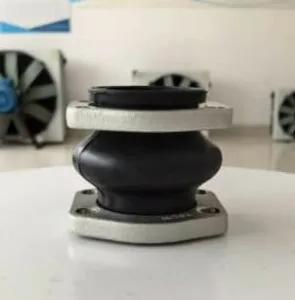
Compared with rigid metal connections and traditional expansion solutions, hydraulic rubber compensators provide several performance advantages that make them suitable for vibration-sensitive hydraulic applications. Their flexibility, movement compensation capability, and material compatibility allow them to perform reliably in systems where mechanical stress and connection stability are key concerns.
-
Effective Vibration and Noise Reduction
One of the main advantages of hydraulic rubber compensators is their ability to absorb vibration generated by pumps and other rotating equipment. The elasticity of rubber helps reduce vibration transmission through pipelines, minimizing stress on joints, fittings, and connected components.
In pump suction and return systems, this vibration isolation function helps protect hydraulic equipment and contributes to more stable system operation.
-
Multi-Directional Movement Compensation
Hydraulic rubber compensators can accommodate axial, lateral, and angular movement within a single component. This flexibility makes them suitable for complex piping layouts where thermal expansion, installation tolerances, or equipment movement may occur.
Compared with rigid connections, rubber compensators reduce the need for additional compensation components while providing greater flexibility during system operation.
-
Material Compatibility for Different Operating Conditions
The material selection of a hydraulic rubber compensator determines its suitability for different media and environments. Standard NBR rubber compounds are commonly used with mineral oils, hydraulic fluids, lubrication oils, cooling oils (-20°C to 80°C, with intermittent exposure up to 100°C), grease, water, and water/oil emulsions.
For applications involving more aggressive media or special requirements, alternative materials such as EPDM or fluororubber, sometimes combined with PTFE liners, can provide improved chemical resistance and durability.
-
Easy Installation and Long-Term Maintenance
Hydraulic rubber compensators are designed for simple installation and reliable operation. Turnable SAE flanges help simplify alignment during assembly, while integrated sealing features reduce the need for additional components.
With regular inspection for ageing, wear, and operating conditions, rubber compensators can provide long-term service performance and help reduce unexpected maintenance costs.
Hydraulic Rubber Compensators vs. Metal Expansion Joints: A Comparison
The choice between rubber and metal expansion joints depends on the specific requirements of each application. The following table compares the two across key performance dimensions.
| Property | Hydraulic Rubber Compensators | Metal Expansion Joints |
|---|---|---|
| Vibration damping | Excellent—near-zero transmission | Moderate—reduces intensity only |
| Noise reduction | Superior—effective sound barrier | Limited—minimal sound insulation |
| Movement compensation | Multi-directional (axial, lateral, angular) | Primarily axial |
| Temperature resistance | -20°C to 80°C (intermittent 100°C) | High—suitable for extreme temperatures |
| Pressure rating | Low to moderate (suction and return lines) | High—suitable for high-pressure systems |
| Media compatibility | Excellent for oils, water, emulsions | Good—material-dependent |
| Corrosion resistance | Excellent—rubber does not corrode | Good—requires appropriate alloy selection |
| Service life | 5–10 years with proper maintenance | Extended fatigue life |
| Typical applications | Pump suction/return lines, vibration-prone systems | High-temperature steam, chemical processing |
Sources: Industry technical literature and manufacturer specifications.
The choice is clear: rubber compensators excel where vibration, noise, and multi-directional movement are the primary concerns. Metal expansion joints are the better choice for high-temperature, high-pressure applications where thermal expansion dominates.
Where Are Hydraulic Rubber Compensators Used in Practice?
Hydraulic rubber compensators are widely used in hydraulic and fluid handling systems where vibration, pressure fluctuations, and mechanical movement may affect equipment performance. By providing a flexible connection between rigid components, they help protect pipelines, pumps, and other critical equipment from excessive stress.
Typical applications include hydraulic power units, pump systems, industrial machinery, marine equipment, and other systems where vibration isolation and connection flexibility are required.
Pump Suction and Return Lines
Pump connection points are one of the most common applications for hydraulic rubber compensators. Hydraulic pumps generate continuous vibration and pressure pulsations during operation, which can be transmitted through connected pipelines and accelerate wear on fittings, valves, and other components.
Installed on suction and return lines, rubber compensators help isolate pump vibration, absorb minor movement, and reduce mechanical stress transferred to the piping system. On the suction side, they help maintain smoother operating conditions by reducing vibration near the pump inlet. On the return side, they help minimize pulsation effects caused by pump discharge.
Typical example:
In a hydraulic power unit used for industrial machinery, multiple pumps may operate continuously within a compact space. Installing rubber compensators between the pumps and piping network helps reduce vibration transfer between circuits, lower operating noise, and improve the service life of connected components.
Hydraulic Power Units and Industrial Hydraulic Equipment
Hydraulic power units and industrial machines often operate under repeated mechanical loads, pressure changes, and temperature fluctuations. Equipment such as injection molding machines, hydraulic presses, CNC systems, and automated production lines can generate vibration that affects connected hydraulic pipes.
Hydraulic rubber compensators provide flexibility between equipment connections, allowing small movements caused by operation, installation tolerances, and thermal expansion. By reducing stress concentration at connection points, they help improve system durability and minimize maintenance requirements.
Typical example:
A hydraulic press used in metal forming applications generates repeated impact forces during operation. A rubber compensator installed between the hydraulic pump outlet and pipeline can help absorb vibration and reduce stress on rigid connections, helping maintain stable hydraulic performance.
Marine and Offshore Applications
Marine and offshore systems face continuous vibration from engines, pumps, and rotating equipment, as well as movement caused by waves and changing operating conditions.
Hydraulic rubber compensators are commonly used in ship hydraulic systems, fuel lines, lubrication circuits, cooling water systems, and hydraulic control equipment. Their flexible structure allows them to absorb vibration while maintaining reliable connections in limited installation spaces.
Typical example:
In a vessel engine room, cooling water pumps generate vibration that can be transferred through piping networks. Installing rubber compensators near pump connections helps isolate vibration, reduce noise, and protect nearby components from long-term mechanical stress.
Industrial Manufacturing and Processing Systems
Manufacturing equipment often produces significant vibration and mechanical shock during operation. Machines such as injection molding machines, die-casting equipment, presses, and filtration systems rely on stable hydraulic connections to maintain production efficiency.
Hydraulic rubber compensators help reduce vibration transmission between machinery and pipelines while accommodating movement caused by repeated operating cycles.
Typical example:
An injection molding machine operates through frequent hydraulic pressure changes during each production cycle. A rubber compensator installed in the hydraulic circuit helps absorb pressure fluctuations and vibration, reducing wear on pipelines and connection points.
Power Generation Systems
Power generation facilities use large fluid systems for cooling, lubrication, and hydraulic control. Pumps, turbines, and auxiliary equipment generate vibration that can travel through extensive piping networks.
Hydraulic rubber compensators help isolate vibration, accommodate thermal movement, and protect connection points in these systems.
Typical example:
In a power plant cooling water system, large circulation pumps operate continuously and create vibration throughout the pipeline network. Rubber compensators installed at pump connections help reduce vibration transmission and support more stable operation.
What Should You Consider When Selecting a Hydraulic Rubber Compensator?
Selecting the right hydraulic rubber compensator requires more than choosing a suitable size. Engineers and buyers need to evaluate the operating environment, fluid characteristics, connection requirements, and system conditions to ensure reliable performance.
The following factors should be considered when choosing a compensator for a hydraulic application.
Media Compatibility
The first consideration is the type of fluid flowing through the system. The rubber material must be compatible with the operating media to prevent premature ageing, swelling, or performance degradation.
Standard NBR hydraulic rubber compensators are commonly used with mineral oils, hydraulic fluids, lubrication oils, cooling oils, grease, and water/oil emulsions. For water-based applications or non-aggressive media, EPDM rubber may provide better compatibility. For applications involving more aggressive chemicals or special operating conditions, fluororubber compounds or PTFE liners may be required.
Always confirm material compatibility based on the fluid type, additives, and operating temperature before selection.
Operating Temperature Range
Temperature directly affects rubber performance and service life. Standard hydraulic rubber compensators typically operate within a moderate temperature range, while extreme hot or cold conditions may require specially selected rubber compounds.
For systems operating outside standard temperature limits, engineers should evaluate alternative materials or consult the manufacturer for suitable solutions.
Pressure Requirements
Hydraulic rubber compensators are commonly installed in suction and return lines where vibration isolation and flexibility are more important than high-pressure resistance.
Before selection, verify that the compensator’s pressure rating matches the actual system requirements. For high-pressure hydraulic circuits, alternative connection solutions may be more suitable depending on the application.
Size and Connection Type
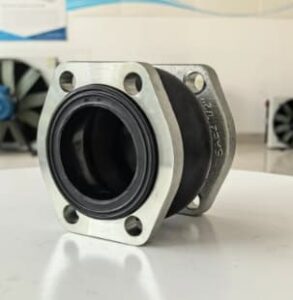
Correct sizing and connection compatibility are essential for reliable installation. Hydraulic rubber compensators are available in different sizes and connection options, including SAE flange designs commonly used in hydraulic systems.
When selecting a model, confirm:
- Connection size and flange type
- Installation space
- Pipeline dimensions
- Alignment requirements
Turnable SAE flanges can simplify installation by allowing easier alignment between existing connections, especially in compact hydraulic systems.
Movement Requirements
Different applications may involve axial movement, lateral displacement, angular movement, or a combination of these conditions.
Hydraulic rubber compensators can accommodate multiple types of movement while reducing stress on connected components. However, the actual compensation capability depends on the product design, size, and installation conditions.
For systems with significant movement requirements, refer to technical specifications or consult the manufacturer for the appropriate model.
Environmental Conditions
The surrounding environment can significantly affect rubber durability. Exposure to UV radiation, ozone, salt spray, chemicals, or extreme weather conditions may accelerate rubber ageing.
For outdoor, marine, or harsh industrial environments, selecting suitable rubber compounds and protective designs can help extend service life and maintain reliable performance.
Conclusion
Hydraulic rubber compensators play an important role in improving the reliability of hydraulic systems by reducing vibration, absorbing movement, and protecting connected components. From pump suction lines and hydraulic power units to marine and industrial applications, they provide a flexible connection solution for systems where stability and durability are critical.
Selecting the right compensator requires careful consideration of media compatibility, temperature range, pressure requirements, and installation conditions. By choosing a suitable model for your specific application, you can improve system performance and reduce maintenance issues.
Looking for a hydraulic rubber compensator for your suction unit or hydraulic system? Contact our team to discuss your requirements, including connection type, material selection, and operating conditions. We can help you find the right solution for your application.