

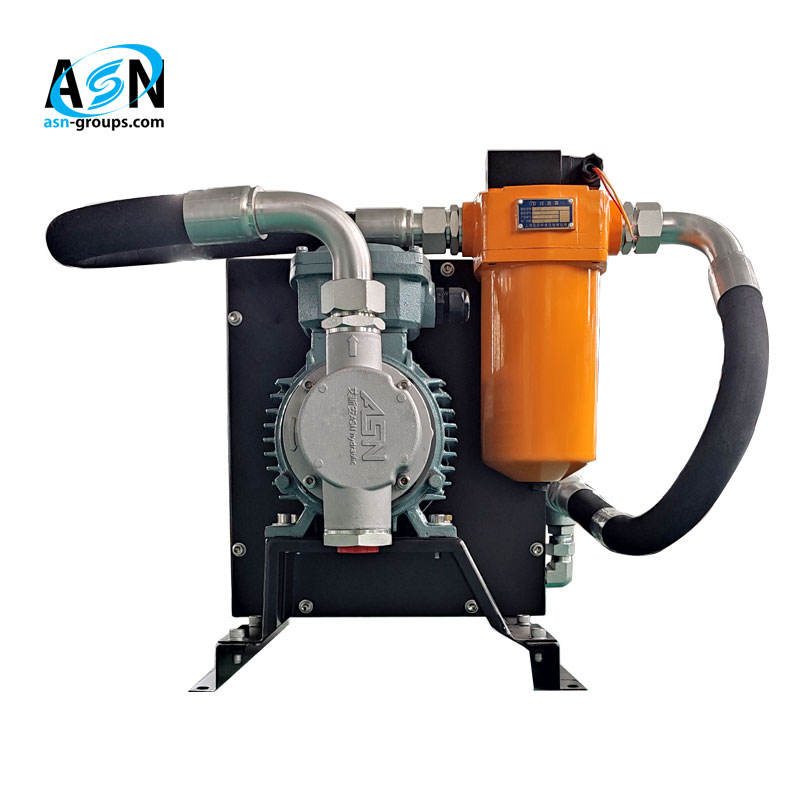


An overheating hydraulic system does not always mean the air-cooled oil cooler has failed. Restricted airflow, clogged fins, fan problems, incorrect cooler sizing, and inadequate oil flow can all reduce cooling performance. In other cases, the hydraulic system may simply be generating more heat than the cooler can dissipate under actual operating conditions.
For industrial and mobile hydraulic applications, troubleshooting should start with the entire cooling circuit rather than replacing the air-cooled oil cooler immediately. Checking airflow, fan operation, oil flow, temperature differential, and actual heat load can help identify the underlying cause. This guide explains the most common air-cooled oil cooler problems, how to troubleshoot hydraulic overheating, and how to select and maintain a cooler that matches your system’s operating requirements.
Why Hydraulic Systems Generate More Heat Than You Might Think
Every hydraulic system converts input power into fluid power, but some energy is lost as heat. Pressure drops across valves, internal leakage in pumps and motors, and friction in lines and fittings all contribute to the system’s heat load. A common design estimate is that 15% to 30% of installed drive power may become waste heat that must be dissipated. Parker Hannifin also cites approximately 30% of installed input power as a useful rule of thumb for preliminary heat-load calculations, although actual operating conditions should be considered when sizing an air-cooled oil cooler.
For a 75 kW (100 HP) power unit, that estimate represents roughly 11 to 22 kW of potential heat load. Whether the system overheats depends on factors such as reservoir size, operating cycle, ambient temperature, and the cooling capacity of the air-cooled oil cooler.
Heat can also create a feedback loop. As hydraulic oil temperature rises, viscosity decreases, which can increase internal leakage in pumps and motors. Those losses generate additional heat, further reducing viscosity. If operating temperatures continue to rise, the problem can develop from a cooling issue into a broader hydraulic efficiency and component-life concern.
What Temperature Is Actually Too Hot
There is no single temperature limit for every hydraulic system. The acceptable range depends on the hydraulic fluid, components, seals, operating conditions, and equipment manufacturer’s specifications. Sustained high temperatures can reduce oil viscosity, accelerate fluid oxidation, and increase internal leakage.
Many hydraulic fluids have recommended maximum operating temperatures around 180°F (82°C), but this should not be treated as a universal limit. Always compare actual oil temperature with the specifications for the fluid and hydraulic components in your system.
| Temperature Range | General Condition | Potential Impact |
|---|---|---|
| 110–130°F | Common operating range for many systems | Stable viscosity when within system specifications |
| 130–160°F | Elevated temperature | Lower viscosity and potentially faster fluid oxidation |
| 160–180°F | High-temperature range | Increased risk of fluid degradation and internal leakage |
| Above 180°F | May exceed some fluid or component limits | Accelerated fluid degradation and potential component damage |
If your system routinely operates above the recommended temperature range, do not assume the air-cooled oil cooler is the only cause. Check airflow, fan operation, oil flow, cooler sizing, and the actual heat generated by the hydraulic circuit.
Six Reasons Your Air-Cooled Oil Cooler Stops Working
When an air-cooled oil cooler cannot maintain the required hydraulic oil temperature, the cause may be related to airflow, oil flow, cooler sizing, installation, or internal contamination. Identifying the actual cause is important before replacing the cooler.
1. Clogged or Fouled Fins
Dust, debris, oil mist, and insects can accumulate between the cooling fins, restricting airflow and reducing heat transfer. This is particularly common in dusty environments such as foundries, wood-processing facilities, and mining operations.
Clean the fins according to the operating environment. Compressed air directed from the clean side outward can help remove loose debris, while a soft brush is suitable for lighter contamination. The cleaning interval should follow site conditions and the cooler manufacturer’s recommendations rather than a fixed schedule.
2. Fan Motor Failure or Insufficient Airflow
The fan is essential to an air-cooled oil cooler’s heat rejection. Bearing problems, electrical faults, incorrect voltage, or reduced fan speed can all limit airflow and cooling performance.
Check whether the fan starts correctly and reaches its specified operating speed. With power disconnected, verify that the fan rotates freely. If it does not run when properly powered, check the motor, wiring, controls, and power supply before replacing the cooler core.
3. Undersized Cooler for Actual Heat Load
An air-cooled oil cooler may be correctly selected according to catalog conditions but still provide insufficient cooling under actual operating conditions. Cooler ratings are based on factors such as oil flow, oil-to-air temperature difference, ambient temperature, and heat rejection capacity.
Compare the system’s actual heat load and cooler-circuit flow with the manufacturer’s performance data. Higher ambient temperatures, greater heat generation, or different oil flow conditions can reduce the available cooling capacity.
4. Restricted Oil Flow Through the Cooler
Insufficient oil flow reduces the amount of heat that can be transferred through the cooler. Possible causes include a clogged filter, a partially closed valve, excessive pressure drop, undersized piping, or incorrect circuit routing.
When troubleshooting an air-cooled oil cooler, verify the actual flow through the cooler circuit rather than assuming it matches the hydraulic pump’s total flow. In systems where only part of the oil flow passes through the cooler, selecting a cooler based solely on pump flow can result in inadequate cooling.
5. Installation Problems That Choke Airflow
Air-cooled oil coolers require adequate clearance and ventilation around the core and fan. Mounting the cooler too close to a wall, inside a poorly ventilated enclosure, or near another heat source can restrict airflow or raise the temperature of the incoming air.
Hot exhaust air can also recirculate into the cooler intake. This reduces the temperature difference between the oil and ambient air and can lower the cooler’s effective heat rejection.
6. Corrosion and Internal Fouling
Air-cooled oil coolers do not have the water-side corrosion concerns associated with water-cooled units, but internal contamination can still affect performance. Sludge, varnish, and debris may accumulate inside the oil passages, particularly when filtration or oil maintenance is inadequate.
If internal contamination is suspected, follow the cooler manufacturer’s recommended inspection and flushing procedure. Do not assume that annual internal cleaning is required for every system; maintenance frequency should depend on oil condition, contamination levels, and operating conditions.

How to Diagnose an Overheating Hydraulic System Step by Step
When hydraulic oil temperature rises, do not immediately assume that the air-cooled oil cooler has failed. Overheating can result from insufficient cooling capacity, restricted flow, excessive heat generation, or problems elsewhere in the hydraulic circuit. A systematic diagnosis can help identify the actual cause before replacing components.
Start with the basic checks. Verify the reservoir oil level and inspect the reservoir for contamination or restricted ventilation. Low oil levels can affect heat dissipation and may also contribute to pump inlet problems.
Then verify oil flow through the cooler. Check the cooler-circuit flow and look for restrictions caused by filters, valves, piping, or incorrect routing. A documented Fluid Power Journal case study illustrates how a piping problem can prevent oil from reaching a heat exchanger even when the cooler itself is functioning.
Check the temperature differential across the cooler. Measure oil temperature at the inlet and outlet under comparable operating conditions. A small temperature difference can indicate inadequate airflow, insufficient oil flow, or a mismatch between the cooler and the system’s heat load. The expected temperature drop depends on flow rate, ambient conditions, and cooler design.
Inspect the fan and fins. With the system safely shut down, inspect the fins for contamination and check that the fan rotates freely. During operation, confirm that the fan reaches its specified speed and that airflow is not obstructed.
Measure the actual heat load. If the cooler is operating correctly but oil temperature continues to rise, the hydraulic circuit may be generating more heat than the cooler can reject. Measure the system’s heat load under representative operating conditions and compare it with the air-cooled oil cooler’s rated capacity.
Air-Cooled vs. Water-Cooled: When Air Cooling Is the Right Choice
Air-cooled and water-cooled oil coolers can both manage hydraulic system heat, but the better option depends on the application, environment, available utilities, and maintenance requirements.
An air-cooled oil cooler is self-contained, requires no cooling water supply, and is generally simpler to install and maintain. This makes air cooling suitable for mobile equipment, remote installations, and hydraulic systems where a reliable water circuit is unavailable. Its main limitation is ambient temperature: cooling performance can decrease as ambient air temperature rises, and an air-cooled oil cooler cannot cool hydraulic oil below the temperature of the incoming air.
Water-cooled oil coolers can provide higher heat transfer performance and more consistent cooling when a suitable water circuit is available. However, they require additional connections and water management, and their maintenance may include monitoring water quality, scaling, corrosion, and leakage.
| Factor | Air-Cooled Oil Cooler | Water-Cooled Oil Cooler |
|---|---|---|
| Heat rejection | Depends on ambient temperature and airflow | Generally less affected by ambient air temperature |
| Installation | Simpler; no water circuit required | More complex; requires water connections |
| Ambient sensitivity | Higher | Lower |
| Maintenance | Fin cleaning and fan inspection | Water quality, scaling, and tube inspection |
| Corrosion considerations | No water-side corrosion | Water-side corrosion may require attention |
| Suitable applications | Mobile equipment, remote sites, and many industrial systems | High heat loads or applications with an available water circuit |
| Key selection factors | Heat load, oil flow, ambient temperature, airflow | Heat load, oil flow, water temperature, and water flow |
When selecting between air-cooled and water-cooled cooling, compare the actual heat load, oil flow, ambient or water temperature, installation conditions, and maintenance requirements. For many hydraulic systems, an appropriately sized air-cooled oil cooler provides a straightforward cooling solution without the additional infrastructure required for water cooling. Where ambient temperatures are high or cooling requirements are more demanding, a water-cooled design may be considered based on the system’s operating conditions.
Selecting the Right Air-Cooled Oil Cooler for Your System
Choosing an air-cooled oil cooler is not simply a matter of matching the cooler’s flow rating to pump output. A unit rated for 100 L/min may still be unsuitable if the actual heat load exceeds its capacity, the pressure drop is too high, or the installation cannot provide sufficient airflow at the expected ambient temperature.
Start with the heat load. If measured data is unavailable, use a preliminary estimate based on the system’s input power and expected efficiency losses. The formula HP × 2545 = BTU/hr can be used to convert horsepower to theoretical power input, but the actual heat that must be removed should be determined from system operating conditions rather than treated as a fixed percentage of drive power.
Next, match the required heat rejection with the air-cooled oil cooler’s performance data at the expected oil flow and ambient temperature. Reputable manufacturers provide performance curves for different operating conditions. When selecting a hydraulic oil cooler, use data that represents the highest expected ambient temperature and actual operating flow rather than relying on the most favorable rating condition.
Pressure drop is another important factor. Excessive restriction through the cooler can increase system pressure and create additional heat, reducing the benefit of the cooling circuit. Check the manufacturer’s pressure-drop data at your actual oil flow and confirm that it is suitable for the hydraulic system.
For mobile equipment, fan selection also matters. Hydraulic- or electric-driven fan options may be available depending on the vehicle’s power and control system. For stationary industrial applications, electric-motor-driven fans are commonly used. When comparing an air-cooled oil cooler supplier or manufacturer, review the cooler’s heat rejection, flow range, pressure drop, fan configuration, and operating pressure rather than selecting by flow rating alone.
Cold-start protection should also be considered for equipment operating in low ambient temperatures. A pressure bypass can help protect the cooler when cold, high-viscosity oil creates excessive pressure during startup. Check whether this feature is required for the hydraulic fluid, operating temperature, and cooler design specified for your application.
FAQ
1. What is an air-cooled oil cooler?
An air-cooled oil cooler removes heat from hydraulic oil by passing air across a finned core. It is commonly used in hydraulic systems, mobile equipment, and industrial machinery where cooling water is unavailable.
2. How does an air-cooled oil cooler work?
An air-cooled oil cooler circulates hot hydraulic oil through a heat exchanger while a fan moves ambient air across the cooling fins. Heat transfers from the oil to the air, lowering the oil temperature before it returns to the hydraulic system.
3. Why is my hydraulic oil cooler not cooling?
Common causes include clogged fins, insufficient airflow, fan failure, restricted oil flow, incorrect cooler sizing, high ambient temperature, and excessive system heat generation. Check the cooling circuit and actual operating conditions before replacing the cooler.
4. How do I size an air-cooled oil cooler?
Cooler sizing depends on heat load, oil flow, ambient temperature, required oil temperature, and allowable pressure drop. Compare these operating conditions with the manufacturer’s performance curves to select an air-cooled oil cooler with sufficient heat rejection capacity.
5. What is the difference between air-cooled and water-cooled oil coolers?
Air-cooled oil coolers use ambient air and require no water circuit, making installation simpler. Water-cooled oil coolers use a water circuit and can provide more consistent cooling when suitable water flow and temperature conditions are available.
6. How often should an air-cooled oil cooler be cleaned?
Inspect the cooler regularly and clean the fins when dust or debris restricts airflow. Cleaning frequency depends on the operating environment, contamination level, and manufacturer’s recommendations rather than a fixed schedule.
Maintaining Your Cooler to Prevent Repeat Failures
Regularly inspect the fins, fan, electrical connections, and airflow to maintain air-cooled oil cooler performance. Monitor hydraulic oil temperature trends and investigate gradual increases before they lead to overheating.
When replacing a cooler, reassess heat load, oil flow, ambient temperature, and pressure drop instead of simply matching the old model. This helps ensure the new air-cooled oil cooler fits the system’s current operating conditions.
Explore our air-cooled oil cooler range or contact our team for help with cooler selection and application requirements.